


Is a 30 Year Fixed Rate Mortgage Refinance Right for You in 2025?
December 27, 2025
Considering a 30 year fixed rate mortgage refinance in 2025? Explore costs, savings, and key factors to decide if it's the right move for you.

Thinking about a 30 year fixed rate mortgage refinance in 2025? It’s a big decision, and honestly, not everyone needs to do it. You've probably seen ads or heard people talking about refinancing to get a lower rate. But is it actually a good idea for you? We're going to break down what you need to consider, from the costs involved to whether it even makes sense for your long-term plans. Let's figure out if a 30 year fixed rate mortgage refinance is the right move for your wallet.
Key Takeaways
- A 30 year fixed rate mortgage refinance can lower your monthly payments or save you money on interest over time, but it comes with closing costs. You need to do the math to see if the savings add up.
- Figure out how long you plan to stay in your home. If you're moving in a few years, the costs of refinancing might not be worth it. If you're staying put for the long haul, it could be a smart move.
- Don't forget about prepayment penalties on your current loan. These fees can eat into your potential savings, so make sure the new loan's benefits outweigh these costs.
- Consider your financial goals. Are you trying to lower your monthly payment, pay off debt faster, or tap into your home's equity? Your goal will help determine if a refinance is the best option.
- Even if the numbers look good, you still need to qualify. Lenders will check your credit score, how much debt you have compared to your income, and how much equity you have in your home.
Evaluating Your Need for a 30 Year Fixed Rate Mortgage Refinance
So, you're thinking about refinancing your mortgage, specifically looking at that 30-year fixed-rate option again. It's a big decision, and honestly, it's not always the right move for everyone. Before you jump in, let's break down why you might even consider it and what you really need to think about.
Understanding the Core Purpose of Refinancing
At its heart, refinancing means you're essentially getting a new mortgage to pay off your old one. People usually do this for a few main reasons. Maybe they want to snag a lower interest rate than what they currently have, which can save a good chunk of money over time. Or perhaps they want to change the length of their loan – maybe shorten it to pay it off faster or, yes, even extend it if they need lower monthly payments right now. Sometimes, people refinance to pull cash out of their home's equity for big expenses like renovations or to pay off other debts. The main goal is usually to improve your financial situation related to your home loan.
Assessing Your Current Mortgage Terms
Before you even look at new rates, you gotta know what you've got right now. Pull out your latest mortgage statement. What's your current interest rate? How much do you still owe? What's the remaining term on your loan? Knowing these details is super important because it's your baseline for comparison. If you have a really low rate from a few years back, refinancing might not make sense unless rates have dropped significantly. Also, check if your current mortgage has any prepayment penalties. Some loans charge you a fee if you pay them off early, and that could eat into any savings you might get from refinancing.
Identifying Your Financial Goals for Refinancing
What do you really want to achieve by refinancing? Are you trying to lower your monthly payment so you have more breathing room in your budget? Or is your main goal to pay off your mortgage faster and save on the total interest you'll pay over the life of the loan? Maybe you need access to cash for something specific. Your goals will heavily influence whether a 30-year fixed-rate refinance is the best path. For instance, if you need lower monthly payments, extending the loan term to 30 years could help, even if it means paying more interest overall. If you want to pay it off faster, a shorter term might be better, but that means a higher monthly payment.
Here's a quick way to think about your goals:
- Lower Monthly Payments: Focus on reducing your immediate cash outflow.
- Reduce Total Interest Paid: Aim to pay off the loan faster or secure a significantly lower rate.
- Access Home Equity: Need funds for other purposes?
- Change Loan Structure: Switch from an adjustable rate to a fixed rate, or vice versa.
It's easy to get caught up in the idea of refinancing, especially when you hear about lower rates. But it's really about whether the change benefits your specific financial picture and timeline. Don't just refinance because everyone else is or because rates look good on paper. Do the math for your situation.
Calculating the Costs and Savings of a Refinance
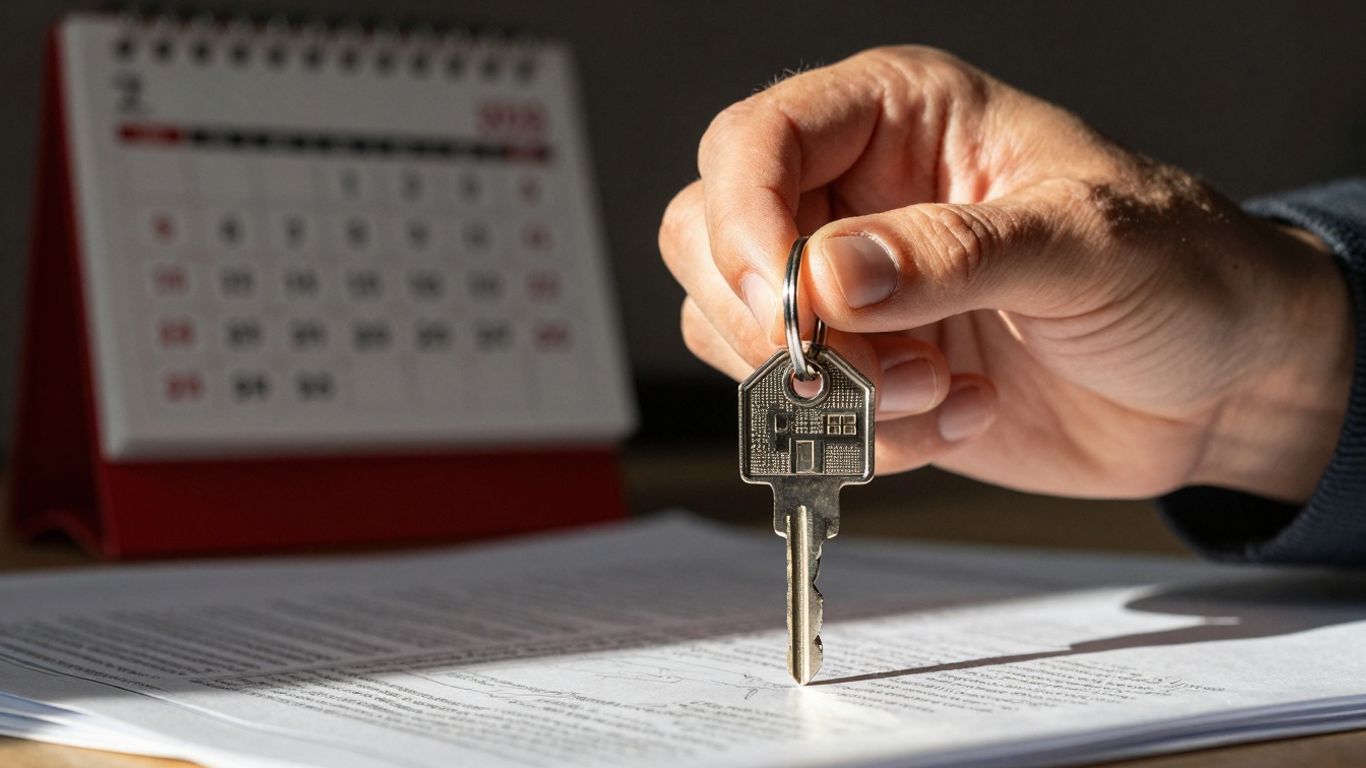
So, you're thinking about refinancing your 30-year fixed-rate mortgage. That's a big step, and before you jump in, you've got to do the math. It's not just about getting a lower interest rate; it's about making sure the whole deal makes financial sense for you. Let's break down what you need to consider.
Estimating Closing Costs for a 30 Year Fixed Rate Mortgage Refinance
Refinancing isn't free. There are always some fees involved, kind of like when you first bought the house. These are called closing costs, and they can add up. You're looking at things like:
- Application and Origination Fees: The lender charges these for processing your new loan.
- Appraisal Fee: Someone needs to come out and figure out what your house is worth now.
- Title Search and Insurance: This makes sure there are no hidden claims on your property.
- Attorney Fees: If you use a lawyer, they'll charge for their time.
- Recording Fees: The government charges a small fee to record the new mortgage on public records.
These costs can typically range from 2% to 6% of the total loan amount. So, if you're refinancing a $300,000 mortgage, you could be looking at anywhere from $6,000 to $18,000 in upfront expenses. Ouch.
Determining Your Break-Even Point
This is probably the most important number you'll calculate. Your break-even point is the time it takes for the money you save each month on your new mortgage to equal the total closing costs you paid. Once you pass your break-even point, every dollar saved is pure profit.
Here's a simple way to figure it out:
- Calculate your total closing costs. Add up all those fees we just talked about.
- Calculate your monthly savings. Subtract your new estimated monthly mortgage payment (principal and interest only) from your current monthly payment.
- Divide your total closing costs by your monthly savings. The result is the number of months it will take to break even.
For example, if your closing costs are $9,000 and you save $150 per month, it will take you 60 months (or 5 years) to break even ($9,000 / $150 = 60).
If your break-even point is longer than you plan to stay in your home, refinancing might not be the best move. It's like buying a fancy coffee machine that takes three years to pay for itself, but you only plan to live there for two. You'd be spending more than you save.
Comparing Potential Monthly and Lifetime Savings
Once you know your break-even point, you can look at the bigger picture. How much will you really save over the life of the loan?
Let's say you have a $300,000 mortgage balance remaining at 7% interest, with 25 years left. Your current monthly payment is about $2,145.
If you refinance to a new 30-year fixed-rate mortgage at 6%, your new monthly payment would be around $1,917. That's a monthly saving of $228.
In this example, you'd save $228 each month. If your closing costs were $7,500, your break-even point would be about 33 months (or just under 3 years). After that, you'd be saving that $228 every month for the next 25 years, totaling over $68,000 in savings over the life of the loan compared to staying with your current mortgage. However, because you're extending the loan term to 30 years, you'd actually pay more in total interest over the entire 30 years compared to if you had just kept paying your original loan for the remaining 25 years. This is why understanding your homeownership timeline is so important, which we'll cover next.
Key Factors Influencing Your Refinance Decision
So, you're thinking about refinancing your 30-year fixed-rate mortgage in 2025. That's great! But before you jump in, let's talk about a few things that really matter when making this choice. It's not just about the interest rate, though that's a big part of it. We need to look at the bigger picture.
Your Homeownership Timeline
How long do you plan to stay in your home? This is a pretty important question. If you're planning to move in, say, the next three to five years, refinancing might not be the best move. Think about it: refinancing comes with closing costs. These can add up, sometimes a few thousand dollars or more. You need to save enough on your monthly payments to cover those costs before you actually start seeing real savings. If you move before you hit that 'break-even' point, you could end up spending more money than you save.
- Short-term homeowner (under 5 years): Refinancing might cost more than you save. Consider alternatives if you just need cash.
- Medium-term homeowner (5-10 years): Refinancing could make sense if the savings are significant enough to cover costs within this timeframe.
- Long-term homeowner (10+ years): Refinancing is often a good bet, as you'll have plenty of time to recoup costs and enjoy lower payments.
Current Interest Rate Environment
This is probably the most obvious factor. Are mortgage rates lower now than when you got your current loan? If rates have dropped significantly, refinancing could save you a good chunk of change over the life of your loan. We're talking about potentially hundreds of dollars a month, which adds up fast. Even a small drop in interest rate can make a difference, especially if you have a large loan balance. Keep an eye on what the Federal Reserve is doing, as their actions can influence mortgage rates.
It's tempting to try and time the market perfectly, waiting for the absolute lowest rate. However, experts often advise that if you see a clear opportunity to save money through refinancing, it's usually better to take advantage of it rather than waiting for a potentially elusive perfect moment.
Impact of Prepayment Penalties
Some older mortgages come with a prepayment penalty. This means if you pay off your loan early – which is what happens when you refinance – you might have to pay a fee. This fee can sometimes be a percentage of the remaining loan balance or a set number of months' worth of interest. For example, a penalty could be three months' interest on your outstanding loan. You absolutely need to check your current mortgage documents to see if this applies to you. If there's a penalty, you'll need to factor that cost into your break-even calculation. The savings from refinancing must be large enough to offset both the closing costs and any prepayment penalty.
Alternatives to a 30 Year Fixed Rate Mortgage Refinance
Sometimes, changing your entire mortgage isn't the best move. Maybe you've got a fantastic interest rate locked in from a few years back, or perhaps you only need a specific amount of cash for a project. In these situations, looking at other ways to tap into your home's value or manage your finances might be smarter than a full refinance.
Considering Home Equity Lines of Credit (HELOCs)
A Home Equity Line of Credit, or HELOC, is kind of like a credit card that's secured by your home. You get a credit limit based on your home's equity, and you can draw from it as needed during a set 'draw period.' You only pay interest on the amount you actually use. This is a good option if you're not sure exactly how much cash you'll need or if you want to spread out your borrowing over time.
- Flexibility: Draw funds as you need them, up to your credit limit.
- Interest Only Payments: Often, you can make interest-only payments during the draw period, which keeps your monthly costs lower initially.
- Potential for Lower Costs: You avoid the full closing costs associated with a mortgage refinance, and you only pay interest on what you borrow.
A HELOC can be a great tool if you need funds for ongoing projects or unexpected expenses, but remember that your home is collateral. If you can't make payments, you could risk losing your house.
Exploring Home Equity Loans
A home equity loan is a bit more straightforward than a HELOC. You borrow a lump sum of money all at once, and you pay it back over a fixed period with a set interest rate. This is a solid choice if you know the exact amount you need for a specific purpose, like a major renovation or consolidating high-interest debt.
- Fixed Payments: Predictable monthly payments make budgeting easier.
- Lump Sum: Get all the cash you need upfront.
- Clear Repayment Schedule: Know exactly when your loan will be paid off.
When to Stick With Your Current Mortgage
There are definitely times when refinancing just doesn't make financial sense. If your current mortgage has a really low interest rate, especially one from the pandemic era, trying to refinance might actually cost you more in the long run due to closing costs and a potentially higher new rate. Also, if you plan to sell your home in the next few years, the break-even point for refinancing might fall after you've already moved, meaning you won't recoup the costs.
- Low Existing Interest Rate: If your current rate is significantly lower than market rates, refinancing might not save you money.
- Short Homeownership Timeline: If you plan to move soon, the closing costs might outweigh any potential savings.
- High Refinancing Costs: Large closing costs can make it difficult to reach your break-even point, especially with only modest monthly savings.
Qualifying for a 30 Year Fixed Rate Mortgage Refinance

So, you're thinking about refinancing your 30-year fixed-rate mortgage. That's great! But before you get too far down the road, you need to make sure you actually qualify. Lenders aren't just handing out new loans willy-nilly. They want to see that you're a good bet to pay them back. This means looking at a few key things about your financial life.
Credit Score Requirements for Refinancing
Your credit score is a big deal. It's basically a three-digit number that tells lenders how risky it might be to lend you money. The higher your score, the better. Generally, for a refinance, you'll want a score of at least 620, but honestly, to get the best rates and terms, aiming for 700 or higher is a much safer bet. If your score is a bit lower, don't despair. You might still qualify, but you'll likely end up with a higher interest rate, which kind of defeats the purpose of refinancing for savings, right?
- Excellent Credit (740+): Best rates and terms, more lender options.
- Good Credit (670-739): Still good chances for favorable rates.
- Fair Credit (580-669): May qualify, but expect higher rates and fees.
- Poor Credit (<580): Refinancing will be very difficult, focus on improving your score first.
Understanding Debt-to-Income Ratios
Next up is your debt-to-income ratio, or DTI. This is a simple calculation: it's the total of your monthly debt payments divided by your gross monthly income. Lenders use this to see if you're taking on too much debt relative to what you earn. For a refinance, most lenders like to see a DTI of 43% or lower. Some might go a little higher, but the lower, the better. It shows you have room in your budget to handle another mortgage payment.
Here's a quick look at what lenders generally prefer:
The Role of Home Equity in Qualification
Finally, there's home equity. This is the difference between what your home is worth and how much you still owe on your mortgage. Lenders want to know they aren't lending you more than your home is worth. This is often measured by your loan-to-value (LTV) ratio. For a refinance, lenders typically want your LTV to be 80% or less. This means you have at least 20% equity in your home. If you have less equity, you might have to pay for private mortgage insurance (PMI) on your new loan, which adds to your monthly cost. Having more equity generally makes it easier to get approved and often leads to better interest rates.
Lenders look at your credit score, your debt-to-income ratio, and your home equity to decide if they'll approve your refinance application. It's a package deal; a strong showing in one area can sometimes help offset a weaker spot in another, but you generally need to be solid across the board.
Choosing the Right Mortgage Refinance Option
So, you've crunched the numbers and decided refinancing makes sense for your situation. Great! But now comes the next big question: what kind of mortgage should you actually refinance into? It's not a one-size-fits-all deal, and what works for your neighbor might not be the best move for you. Let's break down the main choices.
Fixed-Rate vs. Adjustable-Rate Mortgages
This is probably the biggest fork in the road. A fixed-rate mortgage means your interest rate stays the same for the entire life of the loan. Predictable, right? You know exactly what your principal and interest payment will be every month. On the flip side, an adjustable-rate mortgage, or ARM, usually starts with a lower interest rate than a fixed-rate loan. But here's the catch: that rate can change over time, typically based on market conditions. If rates go up, your payment goes up. If they go down, your payment could go down too.
- Fixed-Rate: Offers payment stability and predictability. Good if you plan to stay in your home long-term and want to avoid rate surprises.
- Adjustable-Rate (ARM): Often starts with a lower rate, potentially saving you money in the short term. Ideal if you plan to sell or refinance again before the rate starts adjusting significantly, or if you're comfortable with potential payment fluctuations.
Deciding between fixed and adjustable rates really boils down to your comfort level with risk and your expected time horizon in the home. If peace of mind and budget certainty are your top priorities, a fixed rate is usually the way to go. But if you're looking to maximize short-term savings and are willing to accept some uncertainty, an ARM might be worth considering.
Shorter Loan Terms for Long-Term Savings
While a 30-year fixed-rate refinance is popular for keeping monthly payments lower, have you thought about shortening your loan term? Refinancing into a 15-year or 20-year mortgage, even with a slightly higher monthly payment, can save you a massive amount of money in interest over the life of the loan. For example, taking out a $400,000 mortgage at a 7.25% interest rate on a 30-year term means a monthly payment of about $2,729. Now, imagine refinancing that same amount into a 15-year term at a 5.5% rate. Your monthly payment jumps to around $3,227, but you could save over $360,000 in interest compared to the 30-year loan. It's a trade-off between a lower monthly bill now and significantly less paid overall. You can explore current rates to see how different terms might affect your payments and total interest paid. Check current rates.
When a 30 Year Fixed Rate Mortgage Refinance Makes Sense
So, when is that 30-year fixed-rate refinance the star player? It shines brightest when your primary goal is to lower your monthly housing payment. This could be because you're facing unexpected expenses, want to free up cash flow for other financial goals, or simply need a more comfortable budget. It's also a solid choice if you plan to stay in your home for a long time and value the security of a consistent payment. If you're looking to consolidate debt and want the lowest possible monthly payment to accommodate that, extending to a 30-year term can help make those payments more manageable. Remember, while it might mean paying more interest over the long haul, the immediate relief and stability it offers can be incredibly beneficial for many homeowners.
So, Should You Refinance in 2025?
Deciding whether to refinance your 30-year fixed-rate mortgage in 2025 really comes down to your personal situation. It's not a simple yes or no answer. You've got to look at the numbers – what are the closing costs, and how long will it take for those savings to add up? Compare that to how long you actually plan to stay in your home. If you're planning to move in a few years, maybe it's not worth it. But if you're settling in for the long haul and can snag a lower rate, it could save you a good chunk of change over time. Don't forget to think about whether you just need cash for something, or if you really need to change your mortgage terms. Sometimes a home equity loan is a better fit. Ultimately, crunching the numbers and talking to a mortgage pro is your best bet to figure out if refinancing makes sense for you next year.
Frequently Asked Questions
What exactly is refinancing a mortgage?
Refinancing is like swapping out your old home loan for a brand new one. You might do this to get a lower interest rate, which can lower your monthly payments, or to borrow some cash from the value you've built up in your home.
When should I think about refinancing my mortgage?
It's a good idea to look into refinancing if current interest rates are much lower than the rate on your current loan. Also, if you need to tap into your home's value for things like home improvements or to pay off other debts, refinancing could be an option.
How do I know if refinancing will save me money?
You need to compare the costs of refinancing, like closing fees, with how much you'll save each month on your payments. Figure out how long it will take for your savings to cover those costs. If you plan to stay in your home longer than that 'break-even' time, it's likely a good deal.
What are closing costs for a refinance?
Closing costs are fees you pay when you finalize the new loan. These can include things like application fees, appraisal fees, and legal costs. They usually add up to a few percent of the loan amount, but sometimes lenders let you roll them into the loan itself or offer a slightly higher rate to cover them.
Is a 30-year fixed-rate mortgage always the best refinance option?
Not always. A 30-year fixed rate offers predictable payments, but if you plan to move in a few years, an adjustable-rate mortgage (ARM) might start with a lower rate. Also, choosing a shorter loan term, like 15 years, could save you a lot on interest over time, even if the monthly payments are higher.
What if I don't want to change my current mortgage, but need cash?
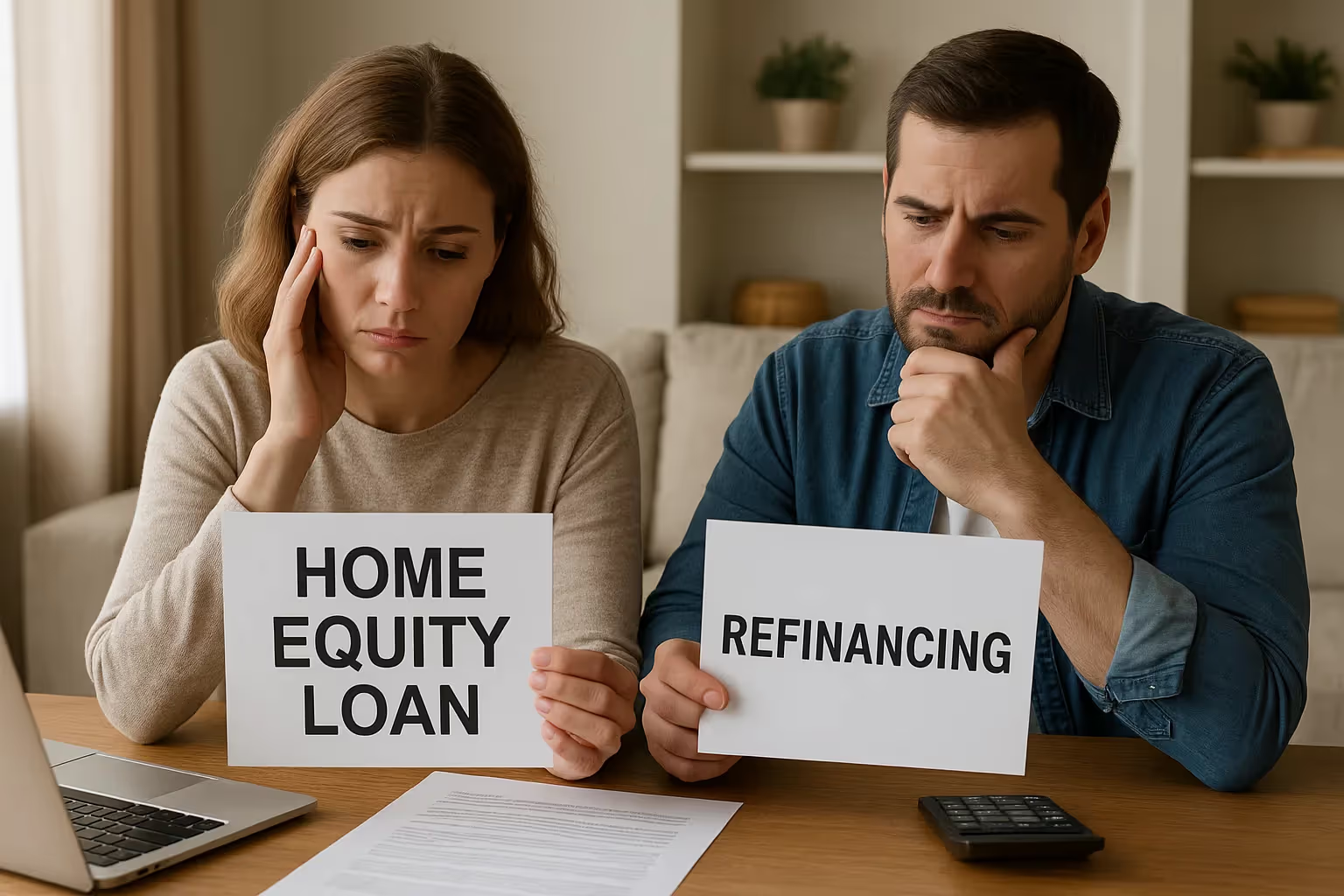
If you're happy with your current mortgage terms and rate but just need extra money, consider a Home Equity Line of Credit (HELOC) or a home equity loan. These let you borrow against your home's value without refinancing your entire mortgage, which can be helpful if you have a great low rate you don't want to lose.












Get in touch with a loan officer
Our dedicated loan officers are here to guide you through every step of the home buying process, ensuring you find the perfect mortgage solution tailored to your needs.
Options
Exercising Options
Selling
Quarterly estimates
Loans
New home

Stay always updated on insightful articles and guides.
Every Monday, you'll get an article or a guide that will help you be more present, focused and productive in your work and personal life.







.png)
.png)
.png)
.avif)
.avif)
.avif)
.png)
.png)
.png)
.avif)
.png)
.png)
.avif)
.png)
.avif)
.png)
.avif)
.avif)