


Unlock Savings: Explore Refinance Mortgage Rates Today for 30-Year Fixed Loans
January 1, 2026
Explore refinance mortgage rates today for 30-year fixed loans. Compare current trends, factors, and benefits to secure the best rate for your home.

Thinking about refinancing your mortgage? It's a big decision, and understanding the current refinance mortgage rates today for 30-year fixed loans is key. This guide breaks down what you need to know, from market trends to what actually affects your rate. We'll help you figure out if refinancing is the right move for your financial situation and what steps to take.
Key Takeaways
- When looking into refinance mortgage rates today for 30-year fixed loans, keep an eye on national interest rate trends and economic news.
- Your credit score, income, and how much equity you have in your home are big factors lenders consider when setting your refinance rate.
- Shopping around with multiple lenders is important to compare offers and find the best refinance mortgage rates today for a 30-year fixed loan.
- A 30-year fixed refinance offers stable monthly payments but means paying more interest over the life of the loan compared to shorter terms.
- Consider alternatives like shorter-term loans or adjustable-rate mortgages if a 30-year fixed refinance doesn't quite fit your needs or financial goals.
Understanding Today's Refinance Mortgage Rates for 30-Year Fixed Loans
Current National Mortgage Interest Rate Trends
Mortgage rates are always on the move, and the 30-year fixed refinance rate is no exception. As of January 1, 2026, the average rate for a 30-year fixed refinance is hovering around 6.67%. It's important to remember that this is just an average, and your actual rate could be higher or lower. Rates can shift daily, influenced by a whole host of economic factors we'll get into shortly. So, while knowing the current average is a good starting point, it's just that – a starting point.
Key Factors Influencing 30-Year Mortgage Rates
So, what makes these rates tick up or down? A few big things come into play. The overall health of the economy is a major player; when things are booming, rates might climb. Inflation also plays a role – if prices are rising fast, lenders might charge more interest to protect their returns. The Federal Reserve's actions, like adjusting interest rates, can also send ripples through the mortgage market. And don't forget about the bond market, particularly the 10-year Treasury yield, which often moves in the same direction as mortgage rates. It's a complex dance of economic signals.
Think of it like trying to predict the weather. You look at a lot of different indicators – temperature, wind, humidity – and even then, you're not always right. Mortgage rates are similar; many forces are at work, and they don't always move in predictable ways.
How to Secure the Best Refinance Rate Today
Getting the best rate isn't just about luck; it's about being prepared and shopping around. Here’s a quick rundown:
- Check Your Credit: Your credit score is a big deal. A higher score generally means a lower interest rate. Take a look at your credit report and score beforehand and see if there's anything you can do to improve it.
- Know Your Numbers: Figure out your income, your debts, and how much equity you have in your home. Lenders will look at your debt-to-income ratio (DTI) and loan-to-value ratio (LTV).
- Shop Around: Don't just go with your current lender. Get quotes from at least three different lenders, ideally on the same day. This gives you a solid basis for comparison.
- Compare Offers Carefully: Look beyond just the interest rate. Pay attention to the Annual Percentage Rate (APR), which includes fees, and consider any points you might pay upfront. Think about how long you plan to stay in the home when weighing these options.
Navigating the 30-Year Fixed Mortgage Refinance Process

So, you've decided to look into refinancing your 30-year fixed mortgage. That's a big step, and it's smart to know what you're getting into. It's not just about finding a lower rate; there's a whole process involved, kind of like getting your first mortgage, but hopefully a bit smoother this time around.
Steps to Refinance Your 30-Year Mortgage
Getting started involves a few key actions. First off, you need to know where you stand financially. Pull up your credit report and check your score. Also, get a good handle on your income and how much equity you've built up in your home. This information is gold when you start talking to lenders. Next, don't just call your current bank. You'll want to shop around and apply with several different lenders. This is how you make sure you're not missing out on a better deal somewhere else. Each lender will have its own set of requirements and rates, so casting a wide net is a good idea.
When to Lock In Your 30-Year Mortgage Rate
This part can feel like a bit of a guessing game. Mortgage rates move around a lot, and deciding when to lock in your rate is a gamble. If you lock too soon, you might miss out on a lower rate that pops up later. Rate locks usually last anywhere from 30 to 60 days, though some go up to 120 days. Some lenders might offer a free rate lock for a certain period, which is nice. Just know that longer locks often cost more. For instance, a 30-day lock might get you one rate, but a 60-day lock could come with a higher rate or require you to pay points, which are essentially upfront fees based on a percentage of the loan amount.
The decision to lock your rate is a strategic one, balancing the desire for a lower monthly payment against the risk of market fluctuations. It's wise to have a target rate in mind based on your financial goals and current market conditions.
Comparing Refinance Offers
Once you start getting offers from lenders, don't just glance at the interest rate. You need to look at the whole picture. What are the closing costs? Are there any points you have to pay upfront? Sometimes, a slightly higher rate with lower upfront fees makes more sense if you plan to move or refinance again in a few years. Conversely, if you plan to stay put for a long time, paying more upfront for a lower rate might be the way to go. It really depends on your personal situation and how long you plan to keep the mortgage. It's a good idea to make a little chart to compare everything side-by-side.
Evaluating the Benefits and Drawbacks of a 30-Year Fixed Refinance
Refinancing your 30-year fixed mortgage can be a smart move, but it's not always the best choice for everyone. Let's break down what you gain and what you might give up.
Advantages of a 30-Year Fixed Refinance
One of the biggest draws of a 30-year fixed refinance is the potential for lower monthly payments. By spreading out the loan over a longer period, your regular payments can become more manageable, freeing up cash flow. This extra breathing room in your budget can be used for other financial goals, like building an emergency fund, saving for retirement, or even tackling home improvements. Plus, the fixed rate means your principal and interest payment stays the same for the entire life of the loan, offering predictability.
- Lower Monthly Payments: Eases immediate budget strain.
- Predictable Payments: Fixed rate offers stability.
- Financial Flexibility: More cash available for other needs.
The stability of a fixed payment can be a real comfort, especially when other costs in life seem to be going up. It's like having a financial anchor.
Potential Downsides to Consider
While lower payments are appealing, it's important to remember that a 30-year loan means you'll be paying interest for a longer time. This can add up significantly over the life of the loan. Also, 30-year mortgages often come with slightly higher interest rates compared to shorter-term loans because lenders are taking on more risk over that extended period. This means you'll build equity in your home at a slower pace.
Here's a quick look at the trade-offs:
Is a 30-Year Mortgage Refinance Right for You?
Deciding if a 30-year fixed refinance makes sense depends on your personal financial situation and goals. If your main objective is to lower your monthly payments to improve your cash flow or if you plan to move or refinance again in a few years, it could be a good option. However, if you're looking to pay off your home quickly and minimize the total interest paid, a shorter loan term might be a better fit. It's all about weighing the immediate relief against the long-term costs.
Exploring Alternatives to a 30-Year Fixed Refinance
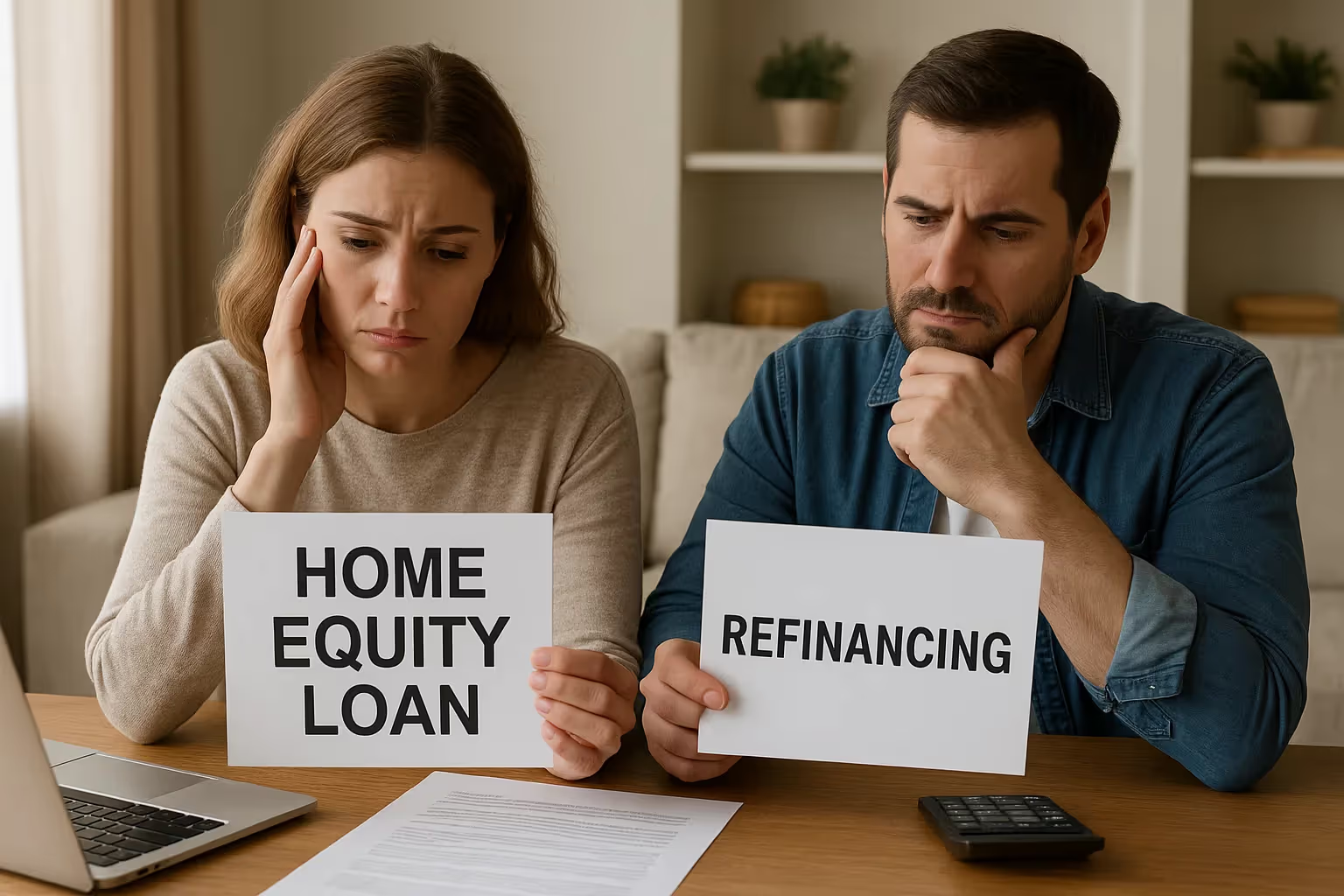
While the 30-year fixed-rate mortgage is a popular choice, it's not the only game in town when you're thinking about refinancing. Depending on your financial situation and goals, other loan types might be a better fit. It's worth looking at these options before you commit.
Shorter Term Fixed-Rate Mortgage Options
If you're looking to pay off your home faster and potentially save on interest over the life of the loan, a shorter term fixed-rate mortgage could be the way to go. Think of it as a speedier version of your current loan.
- 15-Year Fixed: This is a common alternative. You'll make higher monthly payments compared to a 30-year loan, but you'll pay off your mortgage in half the time and likely get a lower interest rate. This means significant interest savings in the long run.
- 10-Year or 20-Year Fixed: Some people opt for these even shorter terms. A 10-year loan will have the highest monthly payments but the most interest savings. A 20-year loan offers a middle ground. These can be good if you're refinancing later in your homeownership journey and want to accelerate your payoff.
Adjustable-Rate Mortgage Considerations
Adjustable-rate mortgages, or ARMs, can be a bit trickier, but they might offer initial savings. The most common type you'll see is a 5/1 ARM.
- How it works: With a 5/1 ARM, you get a fixed interest rate for the first five years. After that, your interest rate can change annually based on market conditions. It could go up or down.
- Who it's for: An ARM might make sense if you plan to sell your home or refinance again before the initial fixed period ends. If you plan to stay put long-term, you risk facing higher payments once the rate starts adjusting. It's a gamble, so weigh the risks carefully.
Flexible Term Loan Possibilities
Not every loan has to fit neatly into a 15 or 30-year box. Many lenders now offer more flexibility.
- Custom Terms: You might find loans with terms ranging anywhere from 8 to 29 years. This allows you to create a payment schedule that better suits your budget and payoff timeline.
- Program Availability: Some programs, like RefiNow™ and Refi Possible®, are designed to help low- and middle-income homeowners refinance. These initiatives aim to make refinancing more accessible, offering tailored financial solutions.
When considering alternatives, always do the math. Compare the total interest paid over the life of each loan option, not just the monthly payment. A lower monthly payment might cost you more in the long run if the interest rate is higher or the term is longer.
Factors That Determine Your 30-Year Refinance Mortgage Rate

So, you're thinking about refinancing your 30-year fixed mortgage. That's smart! But what actually goes into the rate you'll be offered? It's not just some random number pulled out of a hat. Several things play a role, some you can influence, and others are just part of the bigger economic picture.
Elements You Can Control for Better Rates
There are definitely steps you can take to try and snag a better rate. Think of it like preparing for a big presentation – the more you prep, the better the outcome.
- Your Credit Score: This is a big one. Lenders look at your credit score to gauge how risky it might be to lend you money. A higher score generally means a lower risk, which often translates to a better interest rate. If your score isn't where you'd like it, spending some time improving it before you apply can really pay off.
- Debt-to-Income Ratio (DTI): This compares how much you owe each month to how much you earn. A lower DTI shows lenders you can comfortably handle your existing debts plus a new mortgage payment. Keeping this ratio in check is key.
- Loan-to-Value Ratio (LTV): This is the amount you owe on your mortgage compared to the home's value. If you've paid down a good chunk of your mortgage or your home's value has increased, your LTV might be lower, which can help you get a better rate.
- Down Payment (for refinance): While not always applicable for a refinance in the same way as a purchase, if you're doing a cash-out refinance and putting more equity into the deal, it can sometimes influence the rate.
It's worth noting that even small improvements in these areas can make a difference. Don't get discouraged if you can't make drastic changes overnight. Consistent effort can lead to tangible results when it comes to your mortgage rate.
External Influences on Mortgage Pricing
Then there are the factors that are completely out of your hands. These are the broader economic forces that affect everyone.
- Economic Conditions: Things like inflation and the overall health of the economy play a huge part. When inflation is high, mortgage rates often rise because lenders need to compensate for the decreasing purchasing power of money. You can keep an eye on national mortgage interest rate trends to get a sense of the market.
- Federal Reserve Policy: While the Fed doesn't directly set mortgage rates, its actions, like adjusting the federal funds rate, influence them indirectly. Changes in monetary policy can ripple through the financial markets.
- Treasury Yields: The yield on U.S. Treasury bonds, especially longer-term ones like the 10-year Treasury note, often moves in tandem with mortgage rates. When Treasury yields go up, mortgage rates tend to follow.
The Role of Lender Choice in Refinancing
Don't forget that different lenders have different ways of doing business and different pricing structures. It's not a one-size-fits-all market.
- Lender Competition: Some lenders might offer more competitive rates to attract new business, especially in a busy market.
- Lender Fees: Beyond the interest rate itself, lenders charge various fees. These can add up and affect your overall cost, so it's important to look at the Annual Percentage Rate (APR) which includes both the rate and fees.
- Your Relationship with the Lender: Sometimes, existing customers might get slightly better terms, though this isn't always the case. It's always best to shop around.
Here's a quick look at how some of these might stack up:
Shopping around with multiple lenders is really the best way to see who offers you the most favorable terms based on your specific situation and the current market conditions.
Wrapping Up Your Refinance Journey
So, looking into refinancing your 30-year fixed mortgage is definitely something worth your time. Rates can change, and what looks good today might be even better tomorrow, or vice versa. It’s a good idea to keep an eye on things and compare offers from different lenders. Doing a little homework now could mean saving a good chunk of money over the life of your loan. Don't forget to check your credit score and know your home's value before you start shopping around. It all adds up to making a smarter financial move for your household.
Frequently Asked Questions
What exactly is a 30-year fixed-rate mortgage?
A 30-year fixed-rate mortgage means your interest rate stays the same for the entire 30 years you're paying off your loan. This is great because your monthly payment won't change, making it easier to budget, especially as your income grows over time. However, in the beginning, a bigger chunk of your payment goes towards interest rather than paying down what you owe.
Why are people refinancing their mortgages?
People often refinance when interest rates drop. By getting a new loan with a lower rate, they can save money on their monthly payments and over the life of the loan. It's like getting a fresh start with a better deal on your home loan.
When is the best time to lock in my mortgage rate?
Deciding when to lock in your rate can be tricky because rates change often. If you lock too early, you might miss out on even lower rates. Rate locks usually last 30 to 60 days, sometimes longer. Some lenders offer free locks for a certain time. Longer locks might cost a bit more, either through a higher rate or extra fees.
What should I do to get the best refinance rate?
To snag the best rate, first check your credit report and score, and know how much money you have. Apply with several different lenders, not just your current one, to see who offers the best deal. Carefully compare all the offers, looking at both the interest rate and any fees involved. It's also smart to look at what other people say about the lenders.
Are there other home loan options besides a 30-year fixed loan?
Yes, absolutely! You could consider a 15-year fixed-rate loan, which means higher monthly payments but you'll pay off your loan faster and pay less interest overall. There are also adjustable-rate mortgages (ARMs) where the rate can change after an initial period, which might be good if you plan to move or refinance again soon. Some lenders even offer flexible terms between 8 and 29 years.
What things affect my mortgage refinance rate?
Several things play a role. Things you can control include your credit score, how much debt you have compared to your income (your DTI), and how big of a down payment you make. Factors you can't control include the overall economic market, what the government is doing, and general inflation. The specific lender you choose also makes a difference.












Get in touch with a loan officer
Our dedicated loan officers are here to guide you through every step of the home buying process, ensuring you find the perfect mortgage solution tailored to your needs.
Options
Exercising Options
Selling
Quarterly estimates
Loans
New home

Stay always updated on insightful articles and guides.
Every Monday, you'll get an article or a guide that will help you be more present, focused and productive in your work and personal life.







.png)
.png)
.png)
.avif)
.avif)
.avif)
.png)
.png)
.png)
.avif)
.png)
.png)
.avif)
.png)
.avif)
.png)
.avif)
.avif)