


Unlock Savings: Explore Today's FHA Mortgage Refinance Rates
December 13, 2025
Explore today's FHA mortgage refinance rates to unlock savings. Learn about options, qualification, and maximizing your refinance benefits.

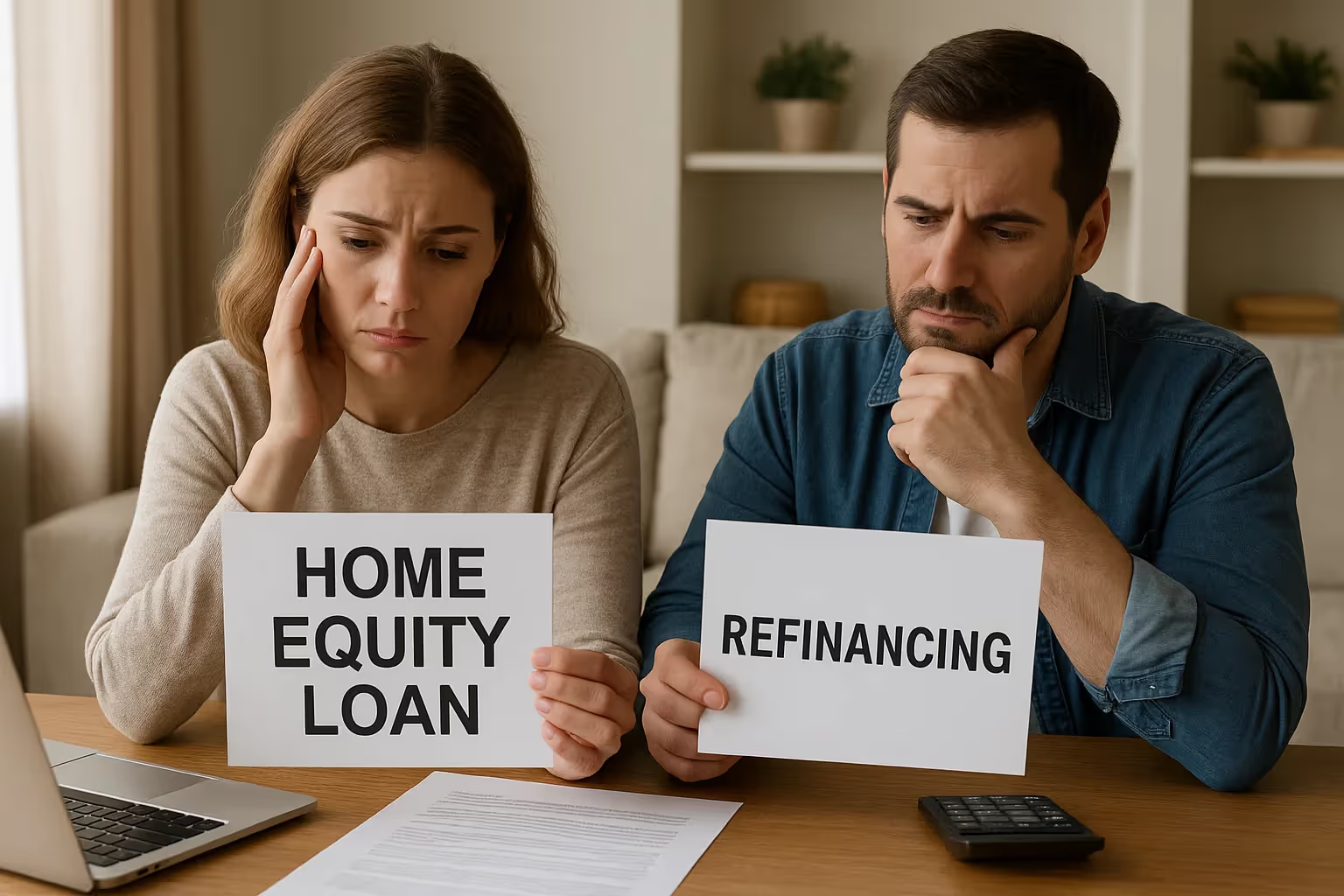
Thinking about refinancing your FHA loan? It might be a good time to look into it. There are different ways to do it, and understanding your options can help you save some money. We'll go over what you need to know about FHA mortgage refinance rates, the different kinds of refinances available, and how to make sure you're getting the best deal possible. It’s not as complicated as it sounds, and a little research can go a long way.
Key Takeaways
- FHA mortgage refinance rates allow you to replace your current FHA loan with a new one, potentially lowering your interest rate or monthly payment.
- There are different types of FHA refinances, including rate-and-term, cash-out, and streamline options, each with its own benefits.
- Your credit score and debt-to-income ratio play a big role in qualifying for the best FHA mortgage refinance rates.
- To maximize savings, compare offers from different lenders and calculate your break-even point to ensure refinancing makes financial sense.
- Consider refinancing if you plan to stay in your home long enough to recoup closing costs and if current market rates are favorable.
Understanding FHA Mortgage Refinance Rates
What Are FHA Refinance Rates?
Refinancing an FHA loan means you're essentially replacing your current mortgage with a new one. This could be swapping an existing FHA loan for another FHA loan, or even switching a non-FHA loan to an FHA-backed one. The main goal is usually to get a better interest rate, a shorter loan term, or both. Sometimes, people refinance to pull cash out of their home's equity for other needs. It's a way to potentially adjust your mortgage to fit your current financial situation better.
Key Factors Influencing FHA Refinance Rates
Several things play a role in the interest rate you'll get when refinancing your FHA loan. Your credit score is a big one; while FHA loans are known for being more forgiving, a higher score generally means a better rate. Your debt-to-income (DTI) ratio also matters – lenders like to see that you're not overextended. The overall market conditions, like what the Federal Reserve is doing with interest rates, have a broad impact too. Plus, the specific type of FHA refinance you choose can affect the rate.
Here's a quick look at what influences your rate:
- Credit Score: A higher score usually leads to a lower rate.
- Debt-to-Income Ratio (DTI): A lower DTI can help you secure a better rate.
- Market Conditions: Broader economic factors and lender pricing.
- Loan Type: Different FHA refinance options might have slightly different rates.
Current Market Trends for FHA Refinance Rates
Right now, FHA refinance rates are looking pretty competitive. In fact, they're often a bit lower than what you might find with conventional mortgage rates. As of December 13, 2025, the national average 30-year FHA refinance APR is around 6.86%. It's a good time to explore your options if you're thinking about refinancing. Remember that rates change daily, so what's available today might be different tomorrow. It's always a good idea to check current rates from multiple lenders to see what works best for you. You can compare national average mortgage rates to top offers to see how much you could save when shopping on Bankrate.
Refinancing can be a smart move, but it's not just about getting a lower interest rate. You need to consider all the costs involved and how long you plan to stay in your home to make sure it makes financial sense for you in the long run.
Types of FHA Refinance Options
So, you've got an FHA loan and you're thinking about refinancing. That's smart! There are a few different ways you can go about it, and each one is good for different situations. It's not a one-size-fits-all deal, you know?
Rate-and-Term FHA Refinance
This is probably the most common type of refinance. Basically, you're swapping your current FHA loan for a new one, usually to get a better interest rate or change the length of the loan, or maybe both. The main goal here is to lower your monthly payment or pay off your mortgage faster. You're not pulling any cash out with this one, though. It's all about tweaking the terms of your existing loan.
FHA Cash-Out Refinance
Now, this one's a bit different. An FHA cash-out refinance lets you do everything a rate-and-term refinance does – lower your rate, change your term – but it also lets you borrow more than you currently owe on your mortgage. The difference between what you owed and what you borrow comes to you in cash. People use this for all sorts of things, like home improvements, paying off high-interest debt, or even just to have some extra funds for emergencies. Just remember, you'll be borrowing more money, so your monthly payments might go up, even if your interest rate goes down.
FHA Streamline Refinance
This option is specifically for people who already have an FHA loan. It's called "streamline" because it's designed to be simpler and faster. Often, you won't need a new appraisal or a full credit check. This can be a really good way to lower your interest rate and monthly payment without a lot of hassle. The catch is that it has to provide a "net tangible benefit," meaning it has to actually save you money, usually by lowering your interest rate. It's a great choice if you've been making your payments on time and want to simplify your mortgage.
Refinancing your mortgage involves closing costs, so it's important to figure out how long it will take for your savings to cover those initial expenses. If you plan to move before you reach that break-even point, refinancing might not be the best financial move for you right now.
Qualifying for the Best FHA Refinance Rates
So, you're thinking about refinancing your FHA loan and want to make sure you get the best possible rate. That's smart! It's not just about the advertised rate, though. A few key things play a big role in what you'll actually end up paying.
Credit Score Requirements for FHA Refinancing
Your credit score is a pretty big deal when it comes to getting approved and snagging a good rate. While FHA loans are known for being more forgiving than conventional loans, a higher score still means a better deal. Generally, you'll want to aim for a score of at least 580 to get the most favorable terms. If your score is a bit lower, you might still qualify, but expect the rate to be higher. It's worth spending some time trying to boost your score if you can before you apply.
Debt-to-Income Ratio and FHA Loans
Another big factor lenders look at is your debt-to-income ratio, or DTI. This is basically a comparison of how much you owe each month in debt payments versus how much you earn. A lower DTI shows lenders you have more room in your budget to handle a new mortgage payment. While FHA loans can sometimes allow for higher DTIs, a lower ratio usually translates to a better refinance rate. Think about paying down some debts before you refinance to improve this number.
Preparing Your Finances for Refinancing
Getting ready for an FHA refinance involves a few steps to make sure everything goes smoothly and you get the best terms possible. It's not just about your credit score and DTI, though those are super important.
- Gather all your financial documents: This includes pay stubs, tax returns, bank statements, and details about your current mortgage and any other debts.
- Get a recent credit report: Know where you stand with your credit score and check for any errors that could be hurting your score.
- Understand your home's value: You might need an appraisal, so having an idea of your home's current market value is helpful.
- Review your current loan: Know your current balance, interest rate, and how much equity you have.
Refinancing costs money upfront, like appraisal fees and closing costs. It's important to figure out how long it will take for your monthly savings to cover these initial expenses. If you plan to move before you reach that break-even point, refinancing might not save you money in the long run.
Here's a quick look at what lenders typically consider:
Maximizing Savings with FHA Refinance

So, you're thinking about refinancing your FHA loan to save some money. That's a smart move, but how do you make sure you're actually getting the best deal and not just going through a bunch of paperwork for nothing? It's all about being smart with your choices.
Comparing FHA Refinance Offers
Don't just take the first offer that comes your way. Seriously, lenders will give you different rates and fees. It's like shopping for anything else – you want to see what's out there.
- Check the Interest Rate: This is the big one, obviously. A lower rate means less money paid over time.
- Look at the APR: The Annual Percentage Rate is important because it includes fees. Sometimes a loan with a slightly higher interest rate but lower fees can be a better deal overall.
- Factor in Fees: Closing costs can add up. Ask for a full breakdown of all the fees involved. Some lenders might waive certain fees or offer credits.
It's a good idea to get quotes from at least three different lenders. This way, you can really see who's offering the most competitive package.
Calculating Your Break-Even Point
This is super important. You'll have costs when you refinance, right? Closing costs can be a few thousand dollars. You need to figure out how long it will take for your monthly savings to pay back those costs.
Here's a simple way to think about it:
- Add up all your closing costs. This includes things like appraisal fees, title insurance, and lender fees.
- Figure out your monthly savings. Subtract your new estimated monthly payment from your current one.
- Divide the total closing costs by your monthly savings. This gives you the number of months it will take to break even.
If you plan to move before you reach your break-even point, refinancing might not be worth it. You could end up paying more in the long run.
For example, if your closing costs are $5,000 and your monthly payment drops by $100, it will take you 50 months (about 4 years) to recoup those costs. If you're planning to stay in your home for at least 5 years, then it's likely a good deal.
The Role of APR in FHA Refinancing
We touched on this, but it's worth repeating. The APR is your real cost of borrowing. It takes the interest rate and adds in most of the fees you'll pay to get the loan. So, two loans might have the same interest rate, but if one has much higher fees, its APR will be higher. A lower APR generally means a cheaper loan over its lifetime. When you're comparing offers, always look at the APR alongside the interest rate to get the full picture.
When to Consider an FHA Refinance

Deciding if refinancing your FHA loan makes sense isn't always a clear-cut decision. It really comes down to your personal situation and what you hope to achieve. Are you looking to save money each month, tap into your home's equity, or maybe just simplify your mortgage payments? Thinking about these things will help you figure out if now is the right time for you.
Assessing Your Homeownership Timeline
How long do you plan on staying in your home? This is a big one. Refinancing involves closing costs, kind of like when you first got your mortgage. You need to make sure the savings you get from a lower interest rate or payment will actually outweigh those costs before you move. If you're planning to sell in, say, two years, and your break-even point is three years out, it might not be worth it. It’s like buying a fancy coffee machine – you need to drink enough coffee to make the purchase pay for itself.
- Short-term (1-3 years): Refinancing might only make sense if you can get a significantly lower rate or if you need cash out urgently. Be very careful about closing costs.
- Medium-term (3-7 years): This is often a sweet spot. You usually have enough time to recoup closing costs and start seeing real savings.
- Long-term (7+ years): Refinancing is almost always a good idea if you can get a better rate. You'll benefit from the lower payments for a long time.
Evaluating Current Interest Rate Environment
Mortgage rates go up and down, kind of like the stock market, but usually a bit slower. When rates are generally falling, it’s a prime time to think about refinancing. You want to lock in a lower rate before they start climbing again. Keep an eye on the national averages, but also see what lenders are offering specifically for FHA loans. Sometimes, even a small drop in the interest rate can mean big savings over the years.
It's not just about the advertised rate. Always look at the Annual Percentage Rate (APR), which includes fees. A slightly higher interest rate with much lower fees might be a better deal overall because you'll reach your break-even point faster.
Potential Benefits of Refinancing
So, why go through the whole refinance process? There are a few good reasons:
- Lower Monthly Payments: This is the most common goal. By getting a lower interest rate or a longer loan term, your monthly payment can drop, freeing up cash for other things.
- Accessing Home Equity (Cash-Out): If your home's value has gone up, you might be able to borrow more than you owe and get the difference in cash. This money can be used for home improvements, paying off debt, or other major expenses.
- Switching Loan Types: While less common for FHA borrowers looking to refinance, sometimes it's possible to switch from an FHA loan to a conventional loan if your credit has improved significantly and you have enough equity. This could potentially get rid of FHA mortgage insurance premiums.
- Simplifying Your Mortgage: An FHA Streamline Refinance, for example, can make the process much easier, sometimes without needing a new appraisal or credit check, if you're just looking to lower your rate on an existing FHA loan.
So, What's the Bottom Line?
Looking into FHA refinance rates today could be a smart move, especially if you're aiming to lower your monthly payments or tap into your home's equity. Remember, it's not just about the advertised rate; checking the APR and understanding all the closing costs helps figure out when you'll start saving money. Shopping around with different lenders is key, and improving your credit score beforehand can really help you snag a better deal. Even if now isn't the perfect time to refinance, getting your finances in order now means you'll be ready when the opportunity arises.
Frequently Asked Questions
What exactly is an FHA refinance?
An FHA refinance is basically swapping your current home loan for a new one. You might do this to get a better interest rate, change how long you have to pay it back, or even get some cash out of your home's value. It could be switching an old FHA loan for a new FHA loan, or even changing a different kind of loan into an FHA loan.
Who can usually get approved for an FHA refinance?
Generally, you'll need a credit score of at least 580 to get the best rates, though some lenders might work with scores as low as 500 with a larger down payment. It's also important to be current on your mortgage payments and have a decent handle on your debt. Lenders will look at your income and how much you owe compared to how much you earn.
How do I find the best FHA refinance rates?
Shopping around is key! Don't just go with the first offer you get. Compare rates from different lenders, and pay attention to both the interest rate and the APR (which includes fees). A lower APR can help you save money faster. Also, improving your credit score and lowering your debt can help you snag a better rate.
What are the different kinds of FHA refinances?
There are a few main types. A 'rate-and-term' refinance lets you change your interest rate or loan length without taking out extra cash. A 'cash-out' refinance allows you to borrow more than you owe and get the difference in cash. And the 'FHA streamline' refinance is a simpler process for existing FHA loans, often without needing a new appraisal or credit check.
How long do I need to stay in my home for refinancing to make sense?
This is a big question! You need to figure out your 'break-even point.' That's how long it takes for the money you save on your monthly payments to cover the costs of refinancing. If you plan to move before you reach that point, it might not be worth it. Generally, the longer you plan to stay, the more sense refinancing makes.
Do FHA loans have mortgage insurance, and can I get rid of it by refinancing?
Yes, FHA loans typically require both an upfront mortgage insurance premium and an annual one. For an FHA streamline refinance, you'll pay these premiums. While refinancing can sometimes help lower your overall mortgage costs, it doesn't automatically remove the FHA mortgage insurance requirement. You might need to refinance into a different type of loan later on if you want to get rid of it.












Get in touch with a loan officer
Our dedicated loan officers are here to guide you through every step of the home buying process, ensuring you find the perfect mortgage solution tailored to your needs.
Options
Exercising Options
Selling
Quarterly estimates
Loans
New home

Stay always updated on insightful articles and guides.
Every Monday, you'll get an article or a guide that will help you be more present, focused and productive in your work and personal life.








.png)
.png)
.png)
.avif)
.avif)
.avif)
.png)
.png)
.png)
.avif)
.png)
.png)
.avif)
.png)
.avif)
.png)
.avif)
.avif)