


Unlock Savings with a Veteran Home Loan Refinance: Your Guide to Lower Rates
December 12, 2025
Explore veteran home loan refinance options to lower rates and payments. Learn about VA IRRRL and cash-out refinances. Get your guide to savings.

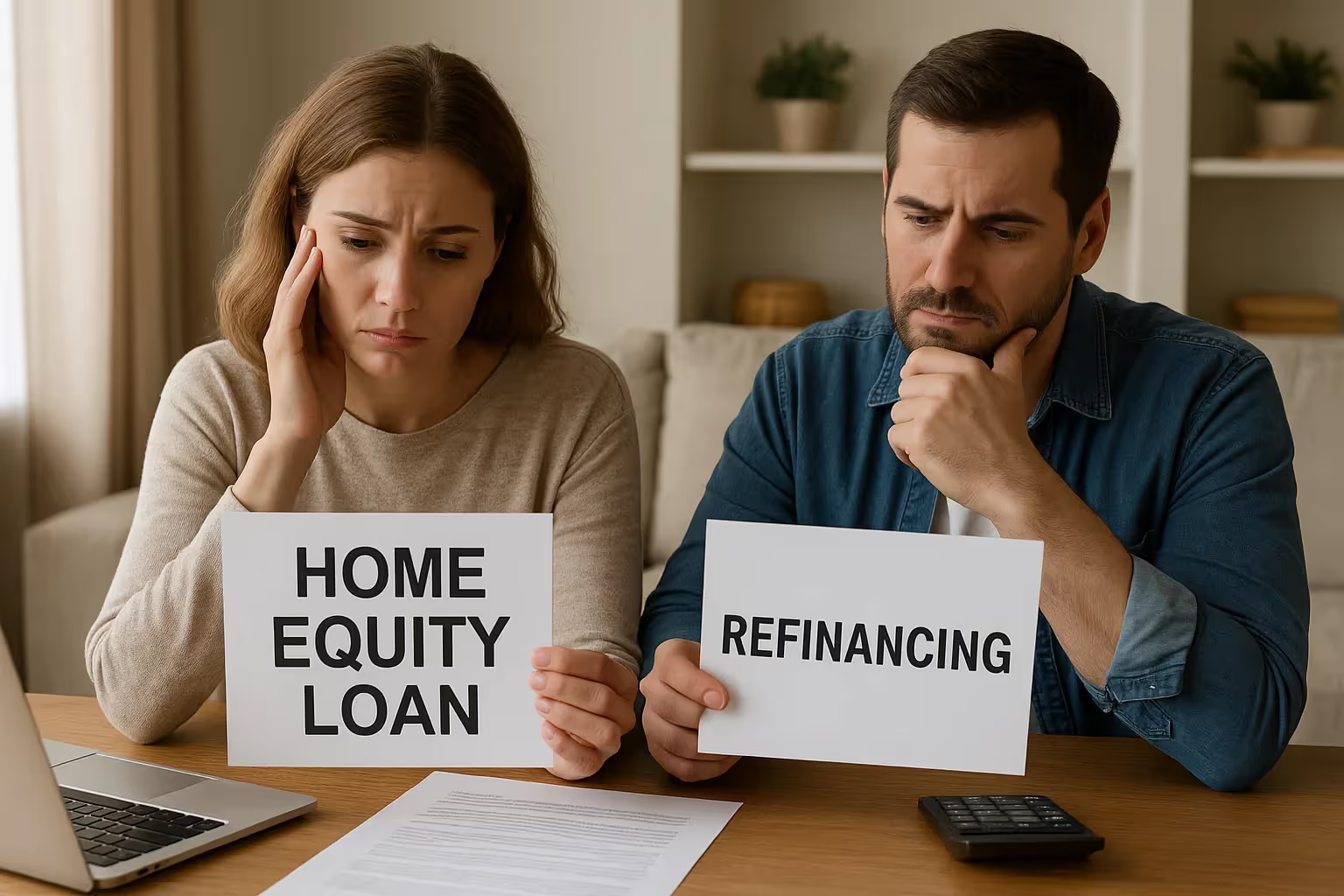
Thinking about refinancing your home loan? If you're a service member, veteran, or eligible spouse, a VA mortgage refinance could be a smart move. It's not just about getting a new loan; it's about potentially saving money, getting cash out, or just making your payments more predictable. Let's break down what a VA home loan refinance can do for you and how to make it work.
Key Takeaways
- You can refinance an existing VA loan to get a better interest rate, change your loan term, or access your home equity.
- To qualify for a VA mortgage refinance, you'll need to meet specific service, income, and credit score guidelines.
- The two main VA loan refinance options are the Interest Rate Reduction Refinance Loan (IRRRL) and the VA cash-out refinance.
- Refinancing can help lower your monthly payments, shorten your loan term for long-term savings, or switch from an adjustable to a fixed rate.
- Always consider the closing costs and how long it will take to recoup those expenses when deciding if a veteran home loan refinance is right for you.
Understanding Your Veteran Home Loan Refinance Options
What is a VA Loan Refinance?
So, you've got a VA loan and you're thinking about refinancing. What does that actually mean? Simply put, it's like swapping your current mortgage for a new one. The Department of Veterans Affairs (VA) still backs this new loan, but the terms can be different. This isn't just a small change; it's an opportunity to get a new loan with potentially better conditions. This could mean a lower interest rate, a different repayment period, or even a way to get some cash out of your home's value.
The Purpose of a VA Refinance
Most people refinance their homes to improve their financial situation. With a VA refinance, the main goal is usually to make your mortgage work better for you. This could involve:
- Securing a lower interest rate: This means you'll pay less interest over the entire life of the loan.
- Shortening your loan term: Paying off your home faster can save you a lot in the long run.
- Switching to a fixed rate: If you have an adjustable-rate mortgage (ARM), refinancing to a fixed rate can give you a predictable monthly payment.
Refinancing isn't always the right move for everyone. It's important to look at the costs involved and how long it will take to see a benefit. Sometimes, the savings aren't worth the upfront expenses.
Key Benefits of Refinancing with a VA Loan
There are several good reasons why a VA refinance might be a smart choice for eligible service members and veterans:
- Potential for Lower Monthly Payments: By getting a lower interest rate or a different loan term, your monthly mortgage payment could decrease, freeing up cash for other needs.
- Accessing Home Equity: A VA cash-out refinance allows you to tap into the equity you've built up in your home. This cash can be used for various purposes, like home improvements, consolidating debt, or covering unexpected expenses.
- Interest Rate Reduction: Even a small drop in your interest rate can add up to significant savings over the years. The VA's Interest Rate Reduction Refinance Loan (IRRRL) is specifically designed for this purpose.
It's all about making your hard-earned VA benefits work even harder for you. Let's break down what a VA home loan refinance really means and how you can make it work to your advantage.
Exploring the Primary VA Refinance Programs

When you're looking to adjust your current VA home loan, there are two main paths you can take. Each program is designed with different goals in mind, so understanding which one fits your situation is key to saving money and meeting your financial objectives.
Interest Rate Reduction Refinance Loan (IRRRL)
The Interest Rate Reduction Refinance Loan, often called the VA streamline refinance, is pretty much what it sounds like. Its main purpose is to help you get a lower interest rate on your existing VA loan. This can lead to a noticeable drop in your monthly mortgage payment, saving you a good chunk of change over the life of the loan. It's designed to be a straightforward process, often skipping the full underwriting you might expect with other loans. This makes it a popular choice for veterans who already have a VA loan and want to take advantage of current market rates. You generally don't need a new appraisal for an IRRRL, which speeds things up.
To qualify for an IRRRL, your current mortgage must be a VA-backed loan. The new loan's interest rate needs to be lower than your current one, or you need to shorten your loan term. There are a few other requirements, like not having any 30-day late payments in the last year, though some lenders might be more flexible. It's a great way to improve your financial standing without a lot of hassle.
Here's a quick look at what makes the IRRRL stand out:
- Streamlined Process: Less paperwork and fewer hoops to jump through compared to a typical refinance.
- Lower Interest Rate: The primary goal is to reduce your monthly payment and overall interest paid.
- No New Appraisal: Often, you won't need a new appraisal, saving you time and money.
- Reduced Funding Fee: The VA funding fee is typically lower for an IRRRL.
The IRRRL is specifically for those who already have a VA loan and want to improve their current terms. It's not for pulling cash out or switching from a different type of loan.
VA Cash-Out Refinance Explained
If you're looking to do more than just lower your interest rate, a VA cash-out refinance might be the better option. This type of refinance allows you to tap into the equity you've built up in your home. You can then use that cash for various purposes, such as home improvements, consolidating debt, paying for education, or covering other significant expenses. With a VA cash-out refinance, you can potentially borrow up to 95% of your home's value.
This program is also beneficial if you have a non-VA loan and want to switch to a VA loan, potentially getting better terms and removing private mortgage insurance (PMI) if you had it on your previous loan. The process is more involved than an IRRRL, typically requiring a full underwriting process, including a new appraisal and income verification, similar to when you first bought your home.
Consider a VA Cash-Out Refinance if:
- You need access to a significant amount of cash.
- You want to consolidate high-interest debts.
- You're looking to make major home renovations.
- You want to switch from a non-VA loan to a VA loan.
It's important to weigh the costs of a cash-out refinance against the benefits of accessing your home equity. Running the numbers will help you decide if it's the right move for your financial situation.
Making the Financial Case for a Veteran Home Loan Refinance
Refinancing your VA loan isn't just about getting a new piece of paper; it's about making smart financial moves that can benefit you long-term. Think of it like this: you wouldn't keep paying for a service if you found a much cheaper option, right? The same logic applies to your mortgage. The main goal here is to put yourself in a better financial spot than you were before.
Lowering Your Monthly Payments
This is often the biggest draw for many homeowners. If current interest rates are lower than what you're paying now, refinancing can significantly reduce your monthly mortgage payment. This frees up cash you can use for other things, like saving, investing, or just having a little more breathing room in your budget. A lower monthly payment can make a big difference in your day-to-day finances.
It's not just about a small drop, either. Sometimes, even a percentage point or two can add up to hundreds of dollars saved over time. It's worth looking into if you've had your current loan for a while and rates have dropped since you got it.
Accessing Home Equity for Your Needs
Your home's value might have gone up since you first got your mortgage. Refinancing, especially with a VA cash-out refinance, allows you to tap into that built-up equity. You can then use that money for various purposes, such as:
- Home improvements or renovations
- Paying off high-interest debt (like credit cards or personal loans)
- Covering education expenses
- Making a large purchase or investment
This can be a way to consolidate debt or fund projects without taking out a separate, potentially more expensive, loan. It's a way to use the asset you've built to meet your current financial needs.
Switching to a Fixed-Rate Mortgage
If you currently have an adjustable-rate mortgage (ARM), you know that your interest rate and monthly payment can change over time. This can be stressful, especially if rates start to climb. Refinancing into a fixed-rate mortgage means your interest rate stays the same for the entire life of the loan. This provides predictability and stability, making budgeting much easier. You'll know exactly what your principal and interest payment will be month after month, year after year. This peace of mind can be incredibly valuable, even if the initial fixed rate is slightly higher than your current introductory ARM rate. It protects you from future rate hikes and offers long-term financial security. You can explore VA loan refinance options to see if this makes sense for your situation.
When considering a refinance, it's important to look at the total financial picture. Sometimes, a slightly higher loan balance after refinancing can lead to significant interest savings over the life of the loan. Don't get too caught up in small numbers if the long-term benefit is much greater.
Calculating the True Cost of a Veteran Home Loan Refinance
Understanding Refinance Closing Costs
Refinancing your VA loan isn't free. Just like when you first bought your home, there are closing costs involved. These can add up and include things like appraisal fees, title insurance, recording fees, and lender origination fees. It's important to get a clear breakdown of all these charges from your lender. Don't just focus on the interest rate; look at the total amount you'll be paying to get the new loan set up.
Determining Your Recoupment Period
This is where you figure out how long it will take for your monthly savings to equal the costs you paid to refinance. The goal is to make sure your savings outweigh the expenses within a reasonable timeframe. A common benchmark is to aim for your savings to cover the refinance costs within three years, or 36 months. If you plan to move before you recoup those costs, refinancing might not be the best financial move for you right now.
Here's a simple way to figure it out:
- Calculate Total Refinance Costs: Add up all the closing costs associated with your new loan.
- Estimate Monthly Savings: Determine how much less you'll pay each month on your principal and interest.
- Divide Costs by Savings: Total Costs / Monthly Savings = Number of Months to Recoup.
For example, if your closing costs are $4,000 and you save $120 per month, it will take you about 33 months ($4,000 / $120) to break even.
While the VA often looks for a net tangible benefit, meaning the refinance should improve your financial situation, it's ultimately up to you to decide if the numbers make sense for your personal circumstances and how long you plan to stay in your home.
When Refinancing May Not Be Advisable
Sometimes, refinancing just doesn't add up. If the closing costs are very high compared to the monthly savings, your recoupment period could be quite long. This might happen if you're only lowering your interest rate by a tiny amount. Also, if you're planning to sell your home in the near future, say within the next two to three years, you might not be in the house long enough to actually see the savings from refinancing. It's also worth noting that refinancing can sometimes increase the total interest paid over the life of the loan, even if your monthly payments go down, especially if you extend the loan term.
Maximizing Your Veteran Home Loan Refinance Benefits

So, you've decided a VA loan refinance might be the right move. That's great! It's not just about getting a new loan document; it's about making your finances work better for you. The goal is usually to improve your financial situation, whether that means saving money each month or getting access to funds you might need. It's about making your hard-earned VA benefits work even harder.
Comparing Lender Offers for the Best Rates
When you're looking into refinancing, don't just go with the first lender you talk to. Shopping around is super important. Different lenders will offer different interest rates and fees, and even a small difference in the interest rate can save you a lot of money over the life of the loan. Think of it like buying anything else – you want to get the best deal possible.
Here's a quick look at what to compare:
- Interest Rate: This is the big one. A lower rate means lower monthly payments and less interest paid overall.
- Annual Percentage Rate (APR): This gives you a more complete picture of the loan's cost, including fees.
- Closing Costs: These are the fees associated with getting the new loan. They can add up, so know what you're paying for.
- Loan Term: How long will you be paying off the loan? Sometimes a longer term means lower monthly payments, but more interest paid over time.
It's a good idea to get quotes from at least three different lenders. This way, you can really see who is offering you the best overall package. You can find resources to help you understand your options and compare lenders, which can be a big help for military families understanding and maximizing their VA home loan benefits.
Ensuring a Net Tangible Benefit
The VA wants to make sure that refinancing actually helps you out. They call this a "Net Tangible Benefit." Basically, it means the refinance has to provide a clear advantage. For an Interest Rate Reduction Refinance Loan (IRRRL), this usually means your interest rate is going down, or you're switching from an adjustable rate to a fixed rate. For a cash-out refinance, the benefit is getting cash, but the VA still wants to see that the new loan terms are favorable.
The VA requires that your refinance provides a clear financial advantage. This ensures you're not just going through the process for no real gain. Always ask your lender to explain how the refinance meets this requirement for your specific situation.
Leveraging Your VA Benefits for Savings
Your VA loan is a benefit earned through your service. Refinancing is a way to make that benefit work even better for you. By getting a lower interest rate, you're saving money that you can then use for other important things. Maybe it's paying down other debt, saving for retirement, or just having a bit more breathing room in your monthly budget. It's about using the advantages available to you to improve your financial well-being. Remember, the goal is to put yourself in a stronger financial position. If you're thinking about refinancing, it's smart to talk to a VA loan expert who can help you review your specific situation and find the best path forward.
Making the Right Choice for Your Home Loan
So, when it comes down to it, refinancing your VA loan isn't a one-size-fits-all deal. It really depends on what you're trying to achieve financially. For many veterans, it's a great way to get a lower monthly payment or lock in a stable, fixed rate, which is pretty nice. But you've got to look at the costs involved, like closing fees, and figure out how long it'll take to make that money back. If you're planning to move soon, it might not make sense. The main thing is to do your homework, compare offers from different lenders, and make sure the refinance actually puts you in a better spot. It's your benefit, so make it work for you.
Frequently Asked Questions
What exactly is a VA loan refinance?
A VA loan refinance is basically swapping your current home loan for a new one that's also backed by the Department of Veterans Affairs (VA). This new loan can have different terms, like a lower interest rate or a shorter payment period, which could save you money or make your payments easier.
Why would a veteran want to refinance their VA loan?
Veterans often refinance to get a lower interest rate, which means paying less money over time. Some also do it to switch from a loan with payments that can change (adjustable-rate) to one with steady payments (fixed-rate) for more predictability. Others might want to take cash out of their home's value for big expenses.
What are the main types of VA refinances?
There are two main kinds: the Interest Rate Reduction Refinance Loan (IRRRL), which is mainly for lowering your interest rate and monthly payments with less paperwork, and the VA Cash-Out Refinance, which lets you take cash from your home's value while also potentially getting a new loan with better terms.
How do I know if refinancing will save me money?
You need to look at the costs of refinancing, like closing fees, and compare them to how much you'll save each month. If it takes too long to earn back the costs (called the recoupment period), it might not be worth it. Generally, you want to see your monthly payments go down.
Are there any costs involved in a VA refinance?
Yes, like most home loans, refinancing usually comes with closing costs. These can include things like appraisal fees, title insurance, and other charges. The VA requires that a refinance offers a 'net tangible benefit,' meaning it should put you in a better financial spot overall.
When might refinancing NOT be a good idea for a veteran?
Refinancing might not be the best choice if the costs to do it are too high compared to your monthly savings, especially if you plan to move before you make back those costs. It's also less ideal if your current loan has a great rate and you don't need to access cash or change your payment structure.












Get in touch with a loan officer
Our dedicated loan officers are here to guide you through every step of the home buying process, ensuring you find the perfect mortgage solution tailored to your needs.
Options
Exercising Options
Selling
Quarterly estimates
Loans
New home

Stay always updated on insightful articles and guides.
Every Monday, you'll get an article or a guide that will help you be more present, focused and productive in your work and personal life.








.png)
.png)
.png)
.avif)
.avif)
.avif)
.png)
.png)
.png)
.avif)
.png)
.png)
.avif)
.png)
.avif)
.png)
.avif)
.avif)