


Unlock Savings: Your Guide to 30 Year Refinance Mortgage Rates in 2026
January 2, 2026
Explore 2026 mortgage rates for a 30 year refinance. Understand trends, factors, and how to secure the best mortgage rates 30 year refinance deal for you.

Thinking about refinancing your mortgage? It's a big decision, and understanding the current mortgage rates 30 year refinance options for 30-year fixed loans is key. This guide breaks down what you need to know, from market trends to what actually affects your rate. We'll help you figure out if refinancing is the right move for your financial situation and what steps to take.
Key Takeaways
- When looking into mortgage rates 30 year refinance for 30-year fixed loans, keep an eye on national interest rate trends and economic news.
- Your credit score, income, and how much equity you have in your home are big factors lenders consider when setting your refinance rate.
- Shopping around with multiple lenders is important to compare offers and find the best mortgage rates 30 year refinance for a 30-year fixed loan.
- A 30-year fixed refinance offers stable monthly payments but means paying more interest over the life of the loan compared to shorter terms.
- Consider alternatives like shorter-term loans or adjustable-rate mortgages if a 30-year fixed refinance doesn't quite fit your needs or financial goals.
Understanding Today's Refinance Mortgage Rates for 30-Year Fixed Loans
Thinking about refinancing your mortgage? It's a pretty big deal, and knowing where 30-year fixed refinance rates stand right now is super important. These rates are always shifting, kind of like the weather, influenced by a bunch of things happening in the economy.
As of January 2, 2026, the average rate for a 30-year fixed refinance is sitting around 6.66%. Keep in mind, this is just a national average. Your actual rate could be a bit higher or lower depending on your personal situation and the lender you choose. It's not set in stone, either; rates can change daily.
Here's a quick look at some average rates as of today:
The overall health of the economy and inflation are major players in what mortgage rates do. When the economy is doing well, rates might go up. If prices are rising quickly, lenders often charge more interest to keep their returns steady.
So, what goes into setting your specific rate? Lenders look at a few key things about you:
- Your Credit Score: A higher score generally means a better rate.
- Your Debt-to-Income Ratio (DTI): This shows how much of your income goes towards paying off debts.
- Your Loan-to-Value Ratio (LTV): This is the amount you owe on your mortgage compared to the home's value.
It's a good idea to get a handle on these factors before you start looking around. It can make a real difference in the offers you receive.
Current National Mortgage Interest Rate Trends
Alright, let's talk about where mortgage rates are at right now, specifically for those 30-year fixed refinances. It's January 2nd, 2026, and things are looking pretty interesting. The national average for a 30-year fixed refinance is currently sitting around 6.66%. Now, that's just an average, mind you. Your actual rate could be a bit higher or lower depending on a bunch of things we'll get into.
It's a bit different from the rate for buying a home, which is averaging around 6.20% for a 30-year fixed. So, refinancing is generally a little more expensive right now than taking out a new loan to buy a place. Keep in mind, these numbers can change daily, influenced by what's happening in the broader economy.
Here's a quick look at how things have been shaking out:
- Rates are generally expected to trend downward through 2026. Most economists are predicting that by the end of the year, we might see those 30-year fixed rates dip into the 5.5% to 6.0% range. That's a pretty significant drop from where we are now.
- The Federal Reserve's actions are a big driver. Their decisions on interest rates, based on inflation and job market data, really move the needle for mortgage rates. If inflation keeps cooling, the Fed might feel more comfortable lowering rates, which usually trickles down to mortgages.
- Treasury yields are a good indicator. The 10-year Treasury note is often used as a benchmark. When those yields go down, mortgage rates tend to follow, and vice versa.
Trying to perfectly time the market for the absolute lowest rate is a tough game. Sometimes, focusing on getting your finances in order and finding a home you love is more important than chasing a fraction of a percent difference. A small rate change can add up over 30 years, sure, but so can a jump in home prices if you wait too long.
So, while the current rates might not be the absolute lowest we've seen, there's a good chance they could improve over the next year. It's all about keeping an eye on the economic news and understanding how it might affect your refinancing options.
Key Factors Influencing 30-Year Mortgage Rates
So, what makes those 30-year refinance rates go up or down? It's not just one thing, but a mix of big economic forces and your own financial picture. Think of it like the weather – lots of things contribute to whether it's sunny or stormy.
The overall health of the economy is a major player. When the economy is humming along nicely, with lots of jobs and spending, mortgage rates often tend to climb. On the flip side, if things slow down, rates might drop. Inflation is another big one. If prices for everything are going up fast, lenders usually charge more interest to make sure the money they get back is still worth something.
Here are some of the main things that move the needle:
- Economic Conditions: National and global economic trends, like GDP growth or recession fears, directly impact how lenders price risk.
- Inflation: As mentioned, rising inflation usually pushes mortgage rates higher.
- Federal Reserve Actions: The Fed's decisions on interest rates and its bond-buying programs can influence mortgage rates, though not always directly or immediately.
- Housing Market Activity: A hot housing market with lots of demand might see slightly higher rates, while a slower market could lead to lower ones.
- Bond Markets: Mortgage rates are often tied to the performance of mortgage-backed securities and Treasury bonds. When these do well, rates can fall, and vice versa.
It's important to remember that while these broad economic factors set the general direction for rates, your personal financial situation is what determines the specific rate you'll actually be offered. Lenders have to balance the big picture with the risk associated with each individual borrower.
How Are 30-Year Mortgage Refinance Rates Set?
So, you're wondering how lenders decide on the interest rate for your 30-year mortgage refinance. It's not just a shot in the dark, you know. They look at a bunch of things to figure out how likely you are to pay back the loan. Think of it like this: they're trying to assess the risk involved.
Here are some of the main things they consider:
- Your Credit Score: This is a big one. A higher credit score generally signals to lenders that you're a reliable borrower who pays bills on time. This often means you'll get a better rate.
- Your Financial History: Beyond just the score, lenders might look at your payment history, how much debt you currently have, and your income. They want to see a steady track record.
- The Loan-to-Value Ratio (LTV): This compares how much you owe on your home to its current market value. If you've paid down a lot of your mortgage or your home's value has gone up, your LTV might be lower, which can help you get a better rate.
- The Overall Economy: This is the part you can't control. Things like inflation, economic growth, and even what the Federal Reserve is doing can influence general interest rate trends. If inflation is high, rates might be higher across the board.
Lenders use all this information to build a picture of your financial health. The goal is to offer you a rate that reflects the risk they're taking. A lower perceived risk usually leads to a more favorable interest rate for you.
It's a mix of your personal financial situation and the broader economic environment. While you can't change the economy, you can certainly work on the parts of your financial profile that are within your control to try and snag the best possible rate.
Factors That Determine Your 30-Year Refinance Mortgage Rate
So, you're thinking about refinancing that 30-year mortgage. Smart move! But what exactly goes into the interest rate you'll be offered? It's not just a random number. Several things play a part, some you can influence, and others are just part of the bigger economic picture.
Think of it like getting ready for a big event; the more you prepare, the better the outcome. Here are the main things lenders look at:
- Your Credit Score: This is a big one. Lenders check your credit score to see how risky it might be to lend you money. A higher score usually means less risk, which often leads to a better interest rate. If your score isn't where you want it, spending a little time improving it before you apply can really make a difference.
- Debt-to-Income Ratio (DTI): This compares how much you owe each month to how much you earn. A lower DTI shows lenders you can comfortably handle your existing debts plus a new mortgage payment. Keeping this ratio in check is key.
- Loan-to-Value Ratio (LTV): This is the amount you owe on your mortgage compared to your home's current value. If you've paid down a good chunk of your mortgage or your home's value has gone up, your LTV might be lower, which can help you get a better rate.
While you can't control the overall economic market or inflation, focusing on these personal financial elements can significantly impact the rate you're offered. It's about presenting yourself as a reliable borrower.
When you're looking at options, remember that mortgage affordability is expected to see a slight improvement by 2026, which could mean a more favorable environment for refinancing your home.
Elements You Can Control for Better Rates
So, you're looking to refinance your 30-year mortgage and want the best possible rate. That's totally doable! While some things, like the overall economy, are out of your hands, there are several key areas where you can make a real difference. Think of it like getting ready for a big event – the more you prepare, the better you'll look.
Here are the main things you can work on:
- Your Credit Score: This is probably the biggest factor. Lenders see your credit score as a snapshot of how reliably you pay back borrowed money. A higher score signals less risk, which usually means a lower interest rate for you. If your score isn't where you want it, spending a few months cleaning it up before you apply can really pay off. This might mean paying down credit card balances or making sure all your bills are paid on time.
- Debt-to-Income Ratio (DTI): This is basically a comparison of how much money you owe each month versus how much you earn. A lower DTI tells lenders you've got room in your budget for a new mortgage payment without stretching yourself too thin. Keeping this number down is pretty important.
- Loan-to-Value Ratio (LTV): This compares how much you owe on your home to its current market value. If you've been paying down your mortgage steadily or your home's value has gone up, your LTV might be lower. A lower LTV can make lenders feel more comfortable, potentially leading to a better rate.
Making even small improvements in these areas can have a noticeable impact on the rate you're offered. Don't feel like you need to make huge changes overnight. Consistent effort over time is what really counts when it comes to getting a good mortgage rate.
It's also worth remembering that different lenders have different ways of doing business. Some might be more competitive than others, especially if they're trying to attract new customers. So, while you're working on your credit and DTI, make sure you're also planning to shop around and compare offers from multiple lenders. It’s not just about the rate itself, but also the fees and terms associated with the loan.
Your Credit Score
When lenders look at your application for a 30-year mortgage refinance, one of the first things they check is your credit score. Think of it as your financial report card. A higher score tells them you've managed borrowed money responsibly in the past, making you a less risky borrower. Generally, a score of 740 or above is considered excellent and often qualifies you for the best available rates.
It's not just about having a good score, though. Lenders want to see a history of on-time payments, low credit utilization, and a mix of credit types. If your score isn't quite where you want it to be, taking a few months to focus on improving it can make a real difference in the rate you're offered. Paying down credit card balances and avoiding unnecessary new credit applications are good first steps.
Here's a general idea of how scores can impact your refinance rate:
- Excellent (740+): Typically get the lowest rates.
- Good (670-739): Can still get competitive rates, but maybe not the absolute best.
- Fair (580-669): May face higher rates or need to meet other criteria to qualify.
- Poor (Below 580): Refinancing might be difficult, and rates will likely be high if approved.
Lenders use your credit score to get a quick snapshot of your financial reliability. A strong score signals that you're likely to repay the loan as agreed, which is why it's a major factor in determining your interest rate. Improving your score before you apply can save you a significant amount of money over the life of the loan.
Don't forget to check your credit report for any errors. Sometimes mistakes happen, and correcting them could give your score a boost without you having to change your financial habits.
Debt-to-Income Ratio (DTI)
Okay, so let's talk about your Debt-to-Income ratio, or DTI for short. Think of it as a snapshot of your monthly financial health. Lenders use it to figure out if you can handle another loan payment on top of what you're already paying.
Basically, it's a comparison: how much money you owe each month versus how much money you bring in before taxes. A lower DTI is generally better because it tells lenders you're not stretched too thin. They want to see that you have enough room in your budget for a mortgage payment.
Here's a simple way to look at it:
- Your Monthly Debt Payments: This includes things like car loans, student loans, credit card minimum payments, and any other regular debts you have.
- Your Gross Monthly Income: This is your income before any taxes or deductions are taken out.
Lenders typically like to see a DTI of 43% or lower, but the lower, the better.
A lower DTI shows lenders you have a good handle on your finances and can comfortably manage additional debt. It's a key indicator of your ability to repay a mortgage, and improving it can make a real difference when you're applying for a refinance.
If your DTI is a bit high, don't sweat it too much. You can work on lowering it by paying down debts or increasing your income. It might take a little time, but it can definitely help you get approved for a better refinance rate.
Loan-to-Value Ratio (LTV)
Okay, so let's talk about the Loan-to-Value ratio, or LTV for short. Basically, it's a way for lenders to see how much you owe on your mortgage compared to what your house is actually worth right now. Think of it as a percentage. If you owe $200,000 on a house that's appraised at $250,000, your LTV is 80% ($200,000 / $250,000).
A lower LTV generally means a better deal for you. Why? Because it shows the lender you have more skin in the game, meaning you've either paid down a good chunk of your loan or your home's value has gone up (or both!). This makes you a less risky borrower in their eyes.
Here’s a simple breakdown:
- High LTV (e.g., 90% or more): This means you owe a lot relative to your home's value. Lenders might see this as higher risk, potentially leading to less favorable rates.
- Moderate LTV (e.g., 80% - 90%): This is a pretty common range. You're likely to get decent rates here.
- Low LTV (e.g., 80% or less): This is the sweet spot. You've built up significant equity, which usually translates to the best interest rates and terms.
When you're refinancing, especially if you're doing a cash-out refinance, your LTV can change. If your home's value has increased significantly since you bought it, or if you've made a lot of extra payments, your LTV might be lower than it was when you first got your mortgage. This is a good thing! It can open the door to better refinance options.
Lenders use LTV as a key metric to assess risk. A lower LTV indicates a stronger borrower position, often resulting in more competitive interest rates and potentially lower private mortgage insurance requirements if applicable, though PMI is less common on refinances unless you're taking out a lot of cash.
So, before you even start talking to lenders, get a rough idea of your home's current market value and how much you still owe. This will give you a good starting point for understanding what kind of LTV you're working with.
How to Compare 30-Year Fixed Refinance Rates
So, you're thinking about refinancing your 30-year mortgage. That's a pretty big deal, and getting the best rate possible can save you a ton of money over the years. It's not just about picking the first offer you see, though. Rates and all the associated costs can really bounce around from one lender to another.
Shopping around is seriously your best bet for saving cash. Research shows that just getting one extra quote could save you around $1,500 over the life of the loan. If you go further and check out five different lenders? You could be looking at saving closer to $3,000. It really pays to do your homework.
Here's a quick look at what average rates looked like on January 2, 2026:
Remember, these are just averages. Your personal rate will depend on a bunch of things, like your credit score and how much you owe versus what your home is worth.
When you're comparing offers, don't just look at the interest rate. You need to consider the Annual Percentage Rate (APR) too, which gives you a more complete picture of the loan's cost, including fees. Also, pay attention to closing costs. These can add up quickly and might make a slightly lower interest rate less appealing.
Here are some steps to take:
- Get pre-approved: This gives you a solid idea of what you can afford and what kind of rates you might qualify for.
- Gather your documents: Have your pay stubs, tax returns, and bank statements ready. This speeds up the process.
- Compare Loan Estimates: Once you get an offer, it comes with a Loan Estimate form. Make sure you compare these side-by-side, looking at rates, fees, and terms.
- Ask questions: Don't be afraid to ask lenders to explain anything you don't understand. It's your money, after all.
It's easy to get caught up in just the advertised interest rate, but that's only part of the story. You've got to look at the whole package – the fees, the points, and what the APR really tells you about the total cost. Sometimes, a loan with a slightly higher rate but lower fees can end up being the better deal in the long run.
Think of it like buying a car. You wouldn't just look at the sticker price, right? You'd consider financing, any add-ons, and the overall value. Refinancing your mortgage is the same way. Take your time, compare carefully, and you'll be in a much better position to make a smart decision.
Comparing Refinance Offers
So, you've started getting quotes from different lenders for your 30-year mortgage refinance. That's great! But don't just stop at the advertised interest rate. It's easy to get caught up in just that one number, but there's a lot more to consider to really know if you're getting the best deal. Think of it like buying a car – the sticker price is just the beginning.
When you're looking at these offers, you need to compare apples to apples. This means looking beyond the interest rate and checking out all the associated costs. These can add up quickly and might make a seemingly lower rate actually more expensive over time.
Here’s a breakdown of what to look at:
- Interest Rate: This is the percentage the lender charges you to borrow money. It directly impacts your monthly payment and the total interest paid over the loan's life.
- Annual Percentage Rate (APR): This is a broader measure of the cost of borrowing. It includes the interest rate plus other fees and costs associated with the loan, like origination fees and points. APR gives you a more accurate picture of the total cost.
- Closing Costs: These are fees you pay to finalize the mortgage. They can include things like appraisal fees, title insurance, origination fees, and recording fees. They can range from 2% to 5% of the loan amount.
- Points: These are fees paid directly to the lender at closing in exchange for a reduced interest rate. One point costs 1% of your loan amount. Paying points can lower your monthly payment, but you need to calculate how long it will take to recoup that upfront cost.
- Loan Term: While you're looking at a 30-year refinance, make sure the term length is clearly stated and understood. Sometimes lenders might offer slightly different terms.
It's a good idea to create a simple spreadsheet or chart to lay out all these details side-by-side for each lender. This makes it much easier to see which offer truly provides the most savings for your specific situation.
Don't get fixated solely on the lowest advertised rate. A slightly higher rate with significantly lower closing costs or points might be a better financial move, especially if you don't plan to stay in the home for the full 30 years. Always calculate the total cost of the loan, including all fees, over your expected time of ownership.
Evaluating the Benefits and Drawbacks of a 30-Year Fixed Refinance
Thinking about refinancing your 30-year fixed mortgage? It can be a good move, but it's not a one-size-fits-all solution. Let's look at what you stand to gain and what you might have to give up.
The biggest draw for many people is the potential for lower monthly payments. By stretching the loan repayment over a longer period, your regular payments can become more manageable. This can free up cash in your budget for other things, like building up savings, investing, or even tackling those home improvement projects you've been putting off. Plus, with a fixed rate, the amount you pay for principal and interest stays the same for the entire loan term, which offers a nice sense of predictability.
Here's a quick rundown of the upsides:
- Lower Monthly Payments: This can really help ease the strain on your budget, especially if your income has changed or other expenses have gone up.
- Payment Stability: Knowing exactly what your principal and interest payment will be each month provides a sense of security.
- Financial Flexibility: Having more breathing room in your monthly budget can give you options for other financial goals.
However, there are some trade-offs to consider. While lower payments are appealing, remember that you'll be paying interest for a longer period. This can add up significantly over the life of the loan. Also, 30-year mortgages often come with slightly higher interest rates compared to shorter-term loans. Lenders take on more risk when they extend a loan for three decades, so that usually means a slightly higher rate. This also means you'll build equity in your home at a slower pace.
When you extend your loan term, you're essentially paying more over time. It's a trade-off for a lower immediate payment. Think about how long you plan to stay in your home and what your long-term financial picture looks like before deciding.
Advantages of a 30-Year Fixed Refinance
Thinking about refinancing your mortgage to a 30-year fixed loan? It's a popular choice for a reason, and the main draw is often the immediate relief it can bring to your monthly budget. By spreading out the repayment over a longer period, your regular payments typically become smaller than they were with a shorter loan term. This can free up cash that you can then use for other important things, like building up savings, paying down other debts, or even making some needed repairs or upgrades to your home.
One of the biggest pluses is the predictability. Since it's a fixed-rate loan, the interest rate stays the same for the entire 30 years. This means your principal and interest payment will never change, no matter what happens with market rates. It's a steady, reliable figure you can count on each month, which can make financial planning a lot easier.
Here are some of the key benefits:
- Lower Monthly Payments: This is often the primary reason people choose a 30-year refinance. It makes your housing cost more manageable, especially if your income has changed or other expenses have gone up.
- Predictable Payments: Knowing exactly what your principal and interest payment will be for the next 30 years offers a sense of security and simplifies budgeting.
- Increased Financial Flexibility: With lower monthly mortgage payments, you have more room in your budget to handle unexpected expenses, save for future goals, or invest.
The stability offered by a fixed payment can be a real comfort, especially when life throws curveballs. It's like having a financial anchor in a sometimes-stormy sea.
While the lower monthly payment is a big win, it's worth remembering that you'll be paying interest for a longer time compared to shorter loan terms. This means the total interest paid over the life of the loan will be higher. Also, because the lender is committing to that rate for three decades, the interest rate itself might be slightly higher than what you'd find on a 15-year loan. You'll also build equity in your home at a slower pace.
Potential Downsides to Consider
While refinancing your 30-year mortgage can offer some nice perks, it's not all sunshine and rainbows. You've got to think about what you might be giving up.
One of the biggest things to watch out for is the total interest you'll end up paying. Because you're stretching the loan out over another 30 years, you'll be paying interest for a much longer time. This can really add up over the life of the loan, potentially costing you more in the long run than you might think.
Also, 30-year fixed rates are often a little higher than shorter-term loans. Lenders see a longer loan as more of a risk, so they charge a bit more for it. This means you'll build up equity in your home at a slower pace compared to, say, a 15-year mortgage. It's like taking two steps forward and one step back on owning your home outright.
Here's a quick rundown of what to keep in mind:
- Extended Interest Payments: You'll pay interest for a longer period, increasing the overall cost.
- Slower Equity Building: It takes more time to own your home free and clear.
- Potentially Higher Rates: Compared to shorter terms, 30-year rates can be slightly higher.
Refinancing always comes with closing costs. You need to figure out if the money you save each month will actually make up for these upfront fees over the time you plan to stay in your home. If you don't stay long enough, you could end up paying more overall.
So, before you jump in, make sure you're looking at the whole picture, not just the lower monthly payment.
Is a 30-Year Mortgage Refinance Right for You?
Deciding if refinancing your 30-year mortgage is the move for you really comes down to what you're trying to achieve with your finances. It's not a one-size-fits-all situation, you know?
Think about your main goals. Are you looking to free up some cash each month? A 30-year refinance can definitely help with that. By spreading out the payments over a longer period, your monthly bill usually goes down. This can give you some breathing room in your budget for other things, like saving up for a rainy day or maybe even tackling some home repairs you've been putting off.
Here’s a quick look at why people consider it:
- Lower Monthly Payments: This is often the biggest draw. It makes your housing cost more manageable day-to-day.
- Increased Cash Flow: Having extra money in your pocket can be used for other financial priorities.
- Payment Stability: The fixed rate means your principal and interest payment stays the same, which is nice for planning.
However, it's not all sunshine and rainbows. You'll be paying interest for a longer stretch, which means you'll likely pay more interest overall compared to a shorter loan term. Also, building up equity in your home happens at a slower pace.
When you're weighing your options, consider how long you plan to stay in your home. If you're thinking of moving in a few years, a 30-year refinance might not make as much sense as if you plan to stay put for the long haul. It's all about matching the loan term to your life plans.
So, if your priority is immediate relief on your monthly payments and you don't mind paying more interest over time, a 30-year refinance could be a good fit. But if paying off your home quickly and minimizing total interest paid is more your style, you might want to look at shorter loan terms, even if the monthly payments are higher.
Should You Refinance to a 15-Year Loan or Another 30-Year Loan?
So, you're thinking about refinancing, and the big question pops up: should you stick with another 30-year loan or maybe jump to a 15-year term? It's not a simple yes or no answer, really. It totally depends on what you're trying to achieve with your mortgage.
Going for a 15-year loan usually means higher monthly payments, no doubt about it. But here's the kicker: you'll pay way less interest over the life of the loan. Think about it, you're cutting the repayment time in half! For example, on a $500,000 loan at 6%, switching from a 30-year to a 15-year term could save you nearly $320,000 in interest. Plus, you build up equity in your home much faster. It's a solid choice if you can comfortably afford those bigger payments and want to be mortgage-free sooner.
On the flip side, sticking with a 30-year refinance offers that familiar, lower monthly payment. This can be a lifesaver if your main goal is to free up cash flow for other expenses, like paying down debt or saving for retirement. It gives you more breathing room in your budget. However, you'll end up paying more interest overall because the loan is stretched out for so much longer. It's also worth noting that 30-year loans sometimes have slightly higher interest rates compared to their 15-year counterparts, simply because lenders are taking on more risk over a longer period. You'll also build equity at a slower pace.
Here’s a quick breakdown:
- 15-Year Refinance:
- Higher monthly payments
- Significantly less total interest paid
- Faster equity building
- Generally lower interest rates
- 30-Year Refinance:
- Lower monthly payments
- More total interest paid
- Slower equity building
- Potentially slightly higher interest rates
The decision really boils down to your financial situation and priorities. If you can swing the higher payments of a 15-year loan and want to save a ton on interest, it's often the smarter financial move. But if you need that lower monthly payment for budget flexibility, another 30-year loan might be the way to go. Sometimes, just paying extra on your current 30-year loan can give you some of the benefits of a shorter term without locking you into a higher payment if your financial situation changes. It's always a good idea to compare current mortgage rates to see what makes the most sense for you.
Ultimately, if you qualify for a 15-year loan and can manage the payments, it's usually the better deal in the long run. But if your budget is tight or you anticipate needing that extra cash each month, a 30-year refinance still offers benefits like predictable payments and lower monthly costs.
When Is the Best Time to Lock In Your Mortgage Rate?
Deciding when to lock in your 30-year refinance rate can feel like a bit of a guessing game, and honestly, it kind of is. Mortgage rates are always doing their own thing, moving up and down based on a whole bunch of economic factors. If you lock in too early, you might miss out on a better rate that pops up a week later. On the flip side, waiting too long could mean you miss the boat entirely and end up with a higher rate than you hoped for.
Rate locks are usually good for about 30 to 60 days, though some lenders might offer longer periods, sometimes up to 120 days, especially for new construction. Just remember, longer locks often come with a higher price tag. You might get a certain rate for a 30-day lock, but a 60-day lock could mean a slightly higher rate or require you to pay extra fees, known as points, upfront.
Here's a simple way to think about it:
- Know your target: Have a specific rate in mind that would make refinancing worthwhile for your financial goals.
- Watch the trends: Keep an eye on economic news and mortgage rate forecasts, but don't obsess over them.
- Consider your timeline: How long do you plan to stay in the home? This impacts how much a slightly higher or lower rate truly matters over time.
Ultimately, the decision to lock is a strategic one. It's about balancing the desire for a lower monthly payment against the risk that rates might change before you close.
While it's tempting to try and time the market perfectly, focusing on your personal financial readiness and locking when you find a rate that meets your goals is often the most practical approach. Trying to predict the exact bottom or top of the market is incredibly difficult, even for the pros.
If you're getting close to closing on your refinance, and you've found a rate that works for you, it's often a good idea to lock it in. This protects you from any sudden market shifts that could increase your rate before your loan is finalized.
When to Lock In Your 30-Year Mortgage Rate
Deciding the exact moment to lock in your 30-year refinance rate can feel like trying to catch lightning in a bottle. Mortgage rates are always shifting, and there's no crystal ball to tell you when the absolute best time will be. You want to lock in a rate that saves you money, but you also don't want to lock it in too early and then see rates drop even further. Most rate locks last for a set period, usually between 30 and 60 days, though some lenders might offer longer periods, sometimes up to 120 days. Keep in mind that longer lock periods often come with a cost, either through a slightly higher interest rate or by requiring you to pay 'points,' which are upfront fees.
Think about what you're trying to achieve with this refinance. Are you aiming for the lowest possible monthly payment, or are you focused on paying off the loan faster? Your personal financial goals play a big part in this decision. It's a good idea to have a target rate in mind before you even start talking to lenders.
Here’s a quick look at what influences the timing:
- Market Trends: Keep an eye on economic news. Things like inflation reports, Federal Reserve announcements, and job market data can all move mortgage rates.
- Your Financial Situation: Have you recently improved your credit score or paid down debt? These improvements might qualify you for a better rate, so it could be worth waiting a bit.
- Lender Offers: Some lenders offer free rate locks for a certain duration, while others charge for them. This can influence how long you feel comfortable waiting.
The decision to lock your rate is a balancing act. You're weighing the potential for future rate drops against the certainty of securing a specific rate today. It's about finding a point where you feel comfortable with the risk and confident in your choice.
Ultimately, the best time to lock is when you've found a rate that meets your financial goals and you feel confident that it's a good deal for your situation. Don't be afraid to ask your lender about their rate lock policies and any associated costs.
Strategies to Maximize Your Advantage
When you're looking to refinance your 30-year mortgage, especially in 2026, there are definitely ways to get yourself a better deal. It's not just about hoping rates go down; it's about making smart moves that put you in a stronger position with lenders. Think of it like preparing for a big negotiation – the better prepared you are, the better outcome you'll likely get.
First off, take a good, hard look at your credit score. This is probably the biggest factor lenders consider, and even a small bump can mean a lower interest rate. Try to pay down any credit card balances you have, and make sure all your bills are paid on time, every time. Also, it's generally a good idea to avoid opening a bunch of new credit accounts right before you plan to refinance, as that can temporarily ding your score.
Another thing you can control is your loan-to-value (LTV) ratio. This is basically the amount you owe on your mortgage compared to the home's current value. If you've built up some equity, or if you can make a larger down payment (if you're doing a cash-out refinance, for example), you can lower your LTV. A lower LTV often means a lower risk for the lender, which can translate into a better rate for you.
Here are a few more things to consider:
- Get pre-approved early: Knowing what rate you qualify for before you start seriously looking at refinance options gives you a solid baseline. It also shows lenders you're serious.
- Shop around with multiple lenders: Don't just stick with your current bank. Different lenders have different rates and fees. Getting quotes from at least three to five different places can really pay off. You might be surprised at the differences.
- Understand rate buydowns: Sometimes, paying a fee upfront, called 'points,' can lower your interest rate for the life of the loan. Figure out if the upfront cost is worth the long-term savings based on how long you plan to keep the mortgage.
It's easy to get caught up in trying to predict what mortgage rates will do next month or next year. But honestly, focusing on what you can control – like your credit score, your debt levels, and shopping around – is a much more reliable strategy for getting the best refinance deal possible. Market timing is tricky, and often, improving your own financial picture yields better results than trying to guess the market's next move.
Finally, when you start getting offers, don't just look at the interest rate. Compare the closing costs, the points, and the overall Annual Percentage Rate (APR). Sometimes a slightly higher rate with lower upfront fees makes more sense, especially if you think you might refinance again in a few years. It's all about finding the package that best fits your financial situation and your plans for the home.
The Refinancing Opportunity

So, you've got your mortgage, and maybe you're thinking about changing it up. That's where refinancing comes in. It's basically like getting a new loan to pay off your old one. The big draw? Often, it's about getting a better interest rate, which can save you a good chunk of change over time.
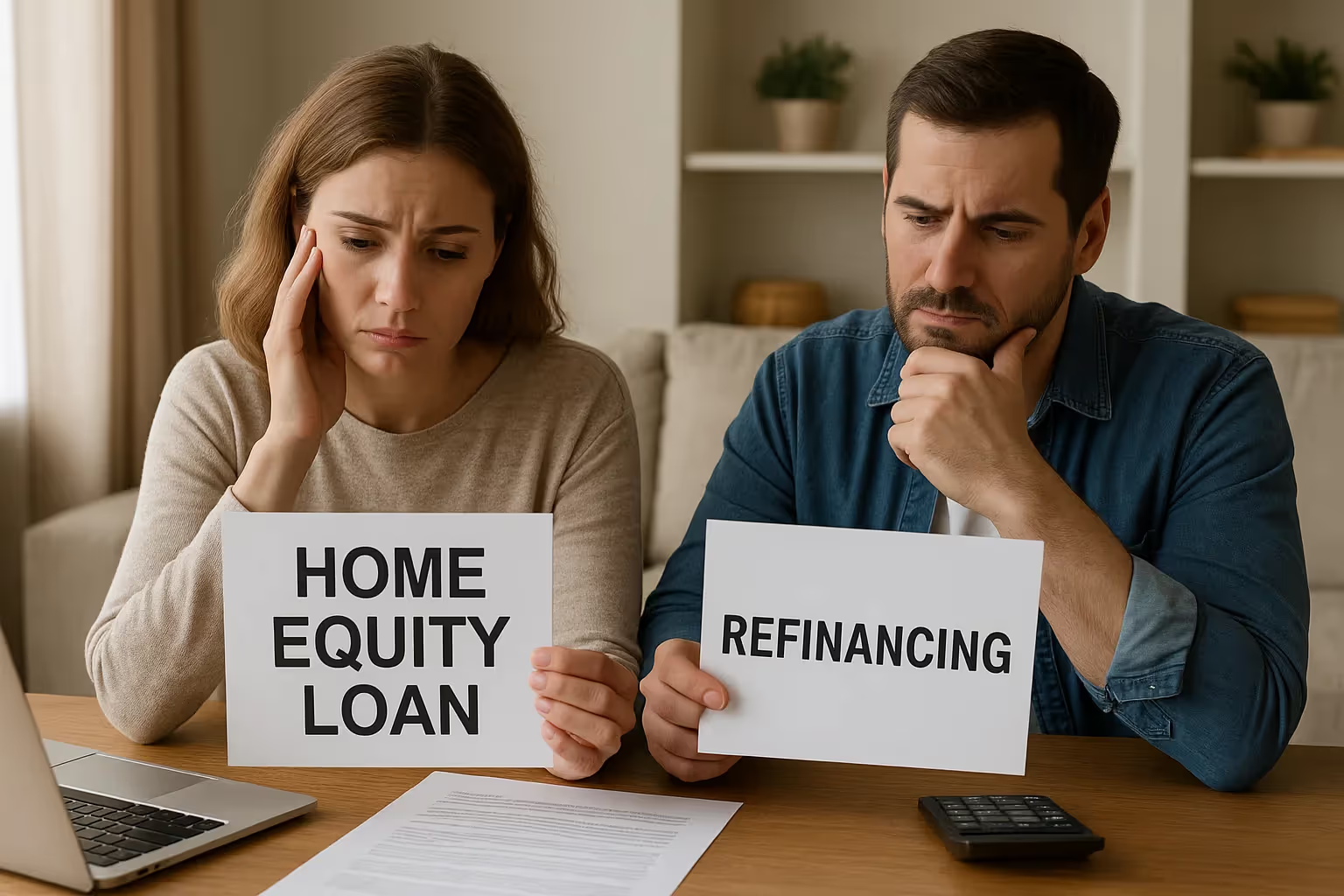
If you bought your home when rates were higher, and rates have since dropped, refinancing could be a smart move. It's not just about the rate, though. Some people refinance to change their loan term, maybe shorten it to pay off the house faster, or even extend it if they need lower monthly payments. You might also consider it if you want to tap into your home's equity for other expenses, like renovations or consolidating debt.
Here's a quick look at why people consider refinancing:
- Lower Interest Rate: This is the most common reason. A lower rate means less money paid in interest over the life of the loan.
- Change Loan Term: Switch from a 30-year to a 15-year loan for faster payoff, or vice versa for lower monthly payments.
- Access Home Equity: Pull cash out for major expenses or debt consolidation.
- Switch Loan Type: Move from an adjustable-rate mortgage (ARM) to a fixed-rate loan for payment stability.
Refinancing isn't free, though. There are closing costs involved, similar to when you first got your mortgage. You'll want to figure out how long it will take for your monthly savings to cover these costs – that's your break-even point. If you plan to stay in your home long enough to recoup those costs and then some, it's likely a good deal. Keep an eye on mortgage rate trends as they can significantly impact your savings potential.
Deciding whether to refinance involves looking at your current financial picture and your future plans. It's not just about chasing the lowest rate; it's about finding a loan that aligns with your goals and makes financial sense for your situation. Don't forget to compare offers from different lenders to find the best terms available.
What Exactly Is a 30-Year Fixed-Rate Mortgage?
So, what's the deal with a 30-year fixed-rate mortgage? Think of it as the most common type of home loan out there. The "fixed-rate" part is key here – it means the interest rate you get when you sign the papers stays the exact same for the entire 30 years you're paying off the loan. No surprises, no sudden jumps in what you owe each month for principal and interest.
This predictability is a big reason why so many people choose it, especially when they're refinancing. It makes budgeting a whole lot simpler. You know exactly what that core part of your payment will be, year after year. It's a steady ship in the often-choppy waters of personal finance.
When you refinance into a 30-year fixed loan, you're essentially replacing your current mortgage with a brand new one. This new loan also has that same fixed interest rate for 30 years. It's a way to reset your loan terms, often to take advantage of lower interest rates available in the market or to adjust your monthly payments.
Here's a quick breakdown of what that means:
- Interest Rate: Stays the same for all 30 years.
- Monthly Payment (Principal & Interest): Remains constant.
- Loan Term: You have three decades to pay it off.
While the payment amount for principal and interest is stable, remember that your total monthly housing cost might still change if you have things like property taxes or homeowner's insurance included in your escrow payment. Those can go up or down over time.
The main appeal of a 30-year fixed mortgage, especially when refinancing, is the stability it offers. You get a predictable payment for a long time, which can be a real comfort. It's a straightforward way to manage your housing costs over the long haul, giving you a clear picture of your financial obligations for decades to come.
Why Are People Refinancing Their Mortgages?

So, why bother with the whole refinancing process? It usually boils down to a few key financial moves. The most common reason folks look into refinancing their 30-year fixed mortgage is to snag a lower interest rate. Think about it: if the rates out there today are significantly lower than the one on your current loan, you could be saving a good chunk of change every month. And over the next 30 years? That adds up to some serious money.
Beyond just lowering your monthly payment, refinancing can also be a way to tap into your home's equity. This is often called a cash-out refinance. People use this for all sorts of things, like funding a big home renovation project, consolidating high-interest debt from credit cards or personal loans, or even covering unexpected expenses. It's like getting a loan against your home's value to pay for other things.
Here are some common reasons people refinance:
- Lowering Monthly Payments: This is the big one. If rates have dropped since you got your original mortgage, a refinance can reduce your monthly housing cost.
- Reducing Total Interest Paid: Even if your monthly payment doesn't change much, a lower rate means less interest paid over the life of the loan.
- Accessing Cash (Cash-Out Refinance): Borrowing more than you currently owe on your mortgage to get cash for other needs.
- Switching Loan Types: Moving from an adjustable-rate mortgage (ARM) to a fixed-rate loan for payment stability, or vice versa if you anticipate rates falling further.
- Consolidating Debt: Using a cash-out refinance to pay off higher-interest debts.
Refinancing isn't just about chasing the lowest rate; it's about aligning your mortgage with your current financial goals and circumstances. Whether it's freeing up cash flow or saving on long-term interest, the decision hinges on your personal situation and how long you plan to stay in your home. It's a tool that can offer financial flexibility when used thoughtfully.
Sometimes, people refinance simply because they want to change their loan term. Maybe they want to pay off their home faster by switching to a 15-year mortgage, or perhaps they need to lower their monthly payments by extending to another 30-year term. It's all about making the mortgage work better for your life right now. If you're considering this, it's a good idea to look into different refinance options to see what fits best.
Program Availability
When you're looking to refinance your 30-year mortgage, it's not just about the interest rate you see advertised. You've got to think about what programs are actually out there and if they fit what you need. Lenders offer all sorts of refinance options, and they aren't all the same. Some might be better for people who want to pay off their loan faster, while others are designed for those who need lower monthly payments right now.
It's important to know that not every lender will have every type of refinance program. Some might specialize in certain loans, like those for first-time homebuyers or for people with less-than-perfect credit. You'll also find that the terms and conditions can vary quite a bit from one lender to another, even for the same basic program.
Here are a few things to keep in mind regarding program availability:
- Loan Types: Beyond the standard 30-year fixed, there are adjustable-rate mortgages (ARMs) that start with a lower rate but can change over time, and also shorter-term loans like 15-year fixed mortgages. Make sure the lender offers the type that aligns with your financial goals.
- Special Programs: Some lenders might have specific programs for certain situations, like refinancing an FHA loan into a conventional one, or options for borrowers who are self-employed.
- Lender Specifics: A big bank might have a different set of products than a small, local credit union. It pays to check out a variety of lenders to see who has what.
The average rate for a 30-year fixed refinance was around 6.23% on January 1, 2026. But remember, this is just an average, and your actual rate will depend on the specific program you choose and your personal financial situation. Always ask lenders about the full range of programs they offer. Check current rates to get a baseline.
Don't just assume all lenders offer the same thing. You might find a fantastic rate, but if they don't have a program that suits your needs, it's not the right fit. So, do your homework and ask questions about the different refinance programs available.
Make a Plan
Thinking about refinancing your 30-year mortgage is a big step, and it pays to have a clear plan before you even start talking to lenders. It’s not just about chasing the lowest advertised rate; it’s about making sure the move actually helps you reach your financial goals. What are you trying to achieve? Maybe you want to shave some money off your monthly payment, or perhaps you're looking to pay down the loan faster over the long haul. Some folks also want to tap into their home's equity for renovations or to consolidate other debts. Whatever your reason, write it down. This will be your compass.
Before you get too far, take a good look at your finances. Your credit score is a major player here; lenders use it to figure out how risky you are as a borrower. Generally, scores of 740 and above tend to get the best deals. If yours isn't quite there, spending a few months working on it – maybe by paying down credit card balances or fixing any errors on your report – can make a real difference. Also, get a handle on your debt-to-income ratio (DTI). This shows lenders how much of your monthly income goes towards debt payments. A lower DTI usually means you're in a better position.
Here’s a quick rundown of what to focus on:
- Define your refinance goal: Lower monthly payments, faster payoff, or cash-out for other needs?
- Check your credit score: Aim for 740 or higher for the best rates.
- Calculate your DTI: Keep this ratio as low as possible.
- Assess your home equity: A lower loan-to-value (LTV) ratio can also help.
Don't just jump into the first offer you see. Shopping around is key. Getting quotes from at least three different lenders can potentially save you thousands. Remember, the interest rate isn't the whole story; closing costs and other fees matter too. You need to figure out if the savings from a lower rate will actually outweigh these upfront expenses over the time you plan to keep the mortgage.
Planning ahead helps you make a smarter decision, whether you're looking at current mortgage rates or thinking about future possibilities. It’s about making the refinance work for you.
Shop Around
Okay, so you've done your homework, you know what you're looking for, and you've got a pretty good idea of what you should be paying. Now comes the part where you actually go out and get some offers. Don't just call the first lender you think of, or stick with the bank you've always used. Seriously, don't do that. It's like going to the grocery store and only looking at one brand of cereal. You're probably missing out on something better.
Applying with multiple lenders is the single best way to find the lowest rate and best terms for your 30-year refinance. Think of it like getting quotes for car insurance or a new roof. Each lender has its own pricing structure, its own fees, and sometimes, its own special deals. What one lender offers might be significantly different from another, even for the same loan amount and the same borrower.
Here's a quick rundown of why shopping around is so important:
- Rate Differences: Even a small difference in interest rate can add up to thousands of dollars over the life of a 30-year loan. A quarter-point lower rate might not sound like much, but on a big loan, it's real money.
- Fee Variations: Lenders charge different fees for things like origination, appraisal, title insurance, and more. These closing costs can add up quickly, and they can vary a lot from one lender to the next.
- Loan Program Options: Some lenders might offer specific refinance programs or have slightly different criteria that could work better for your situation.
- Customer Service: While not directly tied to the rate, you also want to work with a lender that makes the process smooth and keeps you informed. Getting quotes helps you gauge this too.
When you're comparing offers, don't just look at the advertised interest rate. You need to look at the Annual Percentage Rate (APR), which includes most of the fees and gives you a more accurate picture of the total cost of the loan. It's also smart to ask for a Loan Estimate from each lender you're seriously considering. This standardized document makes it easier to compare apples to apples.
It might feel like a bit of extra work to apply with a few different lenders, but the potential savings are absolutely worth it. You're looking at a 30-year commitment, so getting the best possible deal from the start is a really smart financial move. Don't be shy about asking questions and making sure you understand every part of the offer before you commit.
Wrapping Up Your Refinance Journey
So, thinking about refinancing your 30-year mortgage in 2026 is definitely something worth your time. Rates can change, and what looks good today might be even better tomorrow, or vice versa. It’s a good idea to keep an eye on things and compare offers from different lenders. Doing a little homework now could mean saving a good chunk of money over the life of your loan. Don't forget to check your credit score and know your home's value before you start shopping around. It all adds up to making a smarter financial move for your household.
Frequently Asked Questions
What is a 30-year fixed refinance?
A 30-year fixed refinance means you're replacing your current home loan with a new one that lasts for 30 years. The interest rate on this new loan will stay the same for the entire 30 years, making your monthly payments predictable. It's a common way people try to get a better interest rate or change their monthly payment amount.
Why do people refinance their mortgages?
Most often, people refinance when interest rates go down. Getting a new loan with a lower rate can help them save money each month and over the long run. Sometimes, people also refinance to get cash out of their home's value for things like home repairs or to pay off other debts.
What affects my 30-year refinance rate?
Several things influence the interest rate you'll get. Your credit score is a big one – a higher score usually means a better rate. Lenders also look at your debt-to-income ratio (how much you owe compared to how much you earn) and your loan-to-value ratio (how much you owe on the home compared to its value). Big economic factors like inflation and what the Federal Reserve does also play a role.
How can I get the best refinance rate?
To get the best rate, focus on what you can control. Make sure your credit score is as high as possible by paying bills on time and reducing debt. Keep your debt-to-income ratio low. Also, it's super important to shop around and compare offers from several different lenders, not just your current bank. You might be surprised at the differences.
Is a 30-year refinance always the best option?
Not necessarily. While a 30-year refinance can lower your monthly payments, you'll likely pay more interest over the full 30 years compared to a shorter loan. If your goal is to pay off your home faster and save on total interest, a 15-year loan might be better, though the monthly payments will be higher. It really depends on your financial goals and budget.
When should I lock in my refinance rate?
Figuring out the perfect time to lock in your rate can be tricky because rates change daily. A rate lock holds a specific interest rate for you for a set period, usually 30 to 60 days. If rates go up while you're locked, you're protected. If they go down, you might miss out unless you can get a better lock. It's a balance between wanting a lower rate and protecting yourself from rising rates.












Get in touch with a loan officer
Our dedicated loan officers are here to guide you through every step of the home buying process, ensuring you find the perfect mortgage solution tailored to your needs.
Options
Exercising Options
Selling
Quarterly estimates
Loans
New home

Stay always updated on insightful articles and guides.
Every Monday, you'll get an article or a guide that will help you be more present, focused and productive in your work and personal life.







.png)
.png)
.png)
.avif)
.avif)
.avif)
.png)
.png)
.png)
.avif)
.png)
.png)
.avif)
.png)
.avif)
.png)
.avif)
.avif)