


Unlock Savings: Your Guide to Credit Union Refinance Home Loan Options
December 10, 2025
Explore credit union refinance home loan options to lower payments, access equity, or shorten your loan term. Get expert guidance today!

Thinking about changing up your home loan? You're not alone. Lots of homeowners are looking into refinancing their mortgage to get a better handle on their finances. Maybe interest rates have dropped since you first got your loan, or perhaps your financial situation has changed. Whatever the reason, knowing your options for a credit union refinance home loan could mean saving a good chunk of money over time. It’s not as complicated as it sounds, and we’re here to break down what you need to know to make a smart move. The main goal of refinancing is usually to improve your financial situation, whether that means saving money, paying off debt faster, or accessing cash. Before you even start looking at rates, take a moment to figure out what success looks like for you.
Key Takeaways
- Getting even a small drop in your mortgage interest rate can save you a lot of money each month and over the entire loan period.
- A lower monthly payment can give you more breathing room in your budget for bills, savings, or paying off other debts.
- Compare the costs of refinancing, like closing fees, to your potential monthly savings to figure out when you'll break even.
- Switching to a new 30-year term might lower your monthly payment but could lead to paying more interest overall. Consider if this trade-off works for you.
- Refinancing your mortgage is a big decision. By understanding the costs, benefits, and your personal financial goals, you can choose the credit union refinance home loan option that best fits your situation.
Understanding Your Credit Union Refinance Home Loan Options
So, you're thinking about refinancing your mortgage. It's a pretty common move these days, and for good reason. Many homeowners find that their financial picture has changed since they first took out their loan, or maybe interest rates have just dropped significantly. Whatever your situation, looking into refinancing with a credit union could be a smart financial play. Credit unions often provide superior refinance mortgage rates and terms compared to other lenders. Refinancing your home loan with a credit union, such as VCU, can lead to significant financial benefits.
Why Consider Refinancing Your Mortgage?
People decide to refinance for a bunch of different reasons. Maybe you want to lower your monthly payments to free up some cash for other bills or savings. Perhaps you've seen your home's value go up and want to tap into that equity for a big project or to pay off some high-interest debt. Or maybe you just want to pay off your mortgage faster and stop paying so much interest over the long haul. It's all about making your mortgage work better for you right now.
Key Benefits of Refinancing
Refinancing can offer some pretty sweet advantages. Here are some of the main reasons homeowners decide to refinance:
- Lowering Your Monthly Payment: If interest rates have dropped since you got your original loan, or if your credit score has improved, you might qualify for a lower interest rate. This can directly reduce how much you pay each month, freeing up cash for other things.
- Accessing Home Equity: Your home might be worth more now than when you bought it. Refinancing can let you borrow against that increased value, giving you access to funds for things like home improvements, education, or even paying off other debts.
- Shortening Your Loan Term: If you're in a good financial spot, you might want to pay off your mortgage faster. Refinancing into a shorter loan term (like going from a 30-year to a 15-year mortgage) means you'll pay less interest over the life of the loan, building equity quicker.
- Consolidating Debt: High-interest debts, like credit cards, can be a real drain. Refinancing allows you to roll those debts into your mortgage, often at a much lower interest rate. This simplifies your payments into one manageable bill.
Refinancing isn't always the right move for everyone. It's important to weigh the potential savings against the costs involved, like closing fees. Make sure the benefits you gain outweigh the expenses you incur.
Setting Your Refinancing Goals
Before you even start looking at rates, take a moment to figure out what success looks like for you. What do you want to achieve with this refinance? Do you need a lower monthly payment to make ends meet? Are you looking to pull out cash for a specific purpose? Or is your main goal to pay off the loan sooner? Knowing your primary objective will help you choose the right type of refinance and compare offers more effectively. It's about making your mortgage work for your current life, not just the one you had when you first bought your home.
Exploring Different Credit Union Refinance Home Loan Types
So, you're thinking about refinancing your mortgage with a credit union. That's a smart move, as credit unions often have competitive rates and a member-focused approach. But not all refinances are the same. Understanding the different types available will help you pick the one that best fits what you're trying to achieve. It's like choosing the right tool for a specific job – you wouldn't use a hammer to screw in a bolt, right?
Rate-and-Term Refinance Explained
This is probably the most common reason people refinance. A rate-and-term refinance is all about changing the conditions of your existing loan. You're essentially replacing your current mortgage with a new one that has different terms. The two main things you can change here are the interest rate and the loan term (how long you have to pay it back).
- Lowering your interest rate: If market rates have dropped since you first got your mortgage, or if your credit score has improved significantly, you might qualify for a lower interest rate. This can mean lower monthly payments and less interest paid over the life of the loan.
- Changing the loan term: You might want to switch from a 30-year mortgage to a 15-year one to pay off your home faster and save on total interest. Or, if you need more breathing room in your monthly budget, you could extend the term, though this usually means paying more interest in the long run.
The primary goal here is usually to reduce your monthly payment or pay off your mortgage sooner.
It's important to remember that refinancing involves closing costs, just like your original mortgage. You'll want to calculate how long it will take for the savings from your new loan to cover these upfront expenses. This is often called the break-even point.
The Advantages of a Cash-Out Refinance
A cash-out refinance is a bit different. With this type, you get a new mortgage for more than you currently owe on your home. The difference – the "cash-out" – is then given to you in a lump sum. You can use this money for pretty much anything.
Here are some common uses:
- Home improvements: Maybe you've been dreaming of a kitchen remodel or adding a deck.
- Debt consolidation: You can pay off high-interest debts like credit cards or personal loans, potentially saving money on interest and simplifying your payments.
- Education expenses: Funding college for yourself or your children.
- Emergency fund: Building up a safety net for unexpected events.
While it gives you access to funds, remember that you're increasing your mortgage balance and potentially extending your repayment period. Your home serves as collateral for the entire new loan amount.
Understanding Cash-In Refinancing
This type of refinance is less common but can be beneficial in specific situations. With a cash-in refinance, you pay extra money upfront when you refinance to reduce the principal balance of your new loan. This means you're borrowing less than you currently owe on your mortgage.
Why would you do this?
- Lower monthly payments: By reducing the loan amount, your monthly payments will naturally be lower.
- Faster equity building: You'll own more of your home sooner.
- Avoiding PMI: If you've paid down your mortgage and your home's value has increased, a cash-in refinance might help you get your loan balance below 80% of the home's value, allowing you to eliminate Private Mortgage Insurance (PMI).
It requires having extra cash on hand to make that upfront payment, which is why it's not for everyone.
No-Closing-Cost Refinance Options
Closing costs can add up, sometimes thousands of dollars. A no-closing-cost refinance is appealing because it means you don't have to pay those fees out-of-pocket when you close the loan. These costs typically include things like appraisal fees, title insurance, and origination fees.
How does it work? Usually, the lender rolls these costs into the loan itself. This means your loan amount will be slightly higher than if you paid the costs separately. Alternatively, the lender might offer you a slightly higher interest rate in exchange for covering the closing costs.
- Benefit: Immediate savings, as you don't pay upfront.
- Consideration: Your loan balance might be higher, or your interest rate could be a bit higher than other options.
This can be a good option if you don't have the cash for closing costs right now but still want to take advantage of a lower interest rate or other benefits of refinancing.
Navigating the Credit Union Refinance Home Loan Process
So, you're thinking about refinancing your mortgage with a credit union. That's great! It can be a smart move, but like anything involving a big loan, it helps to know what you're getting into. It's not just about filling out a few forms; there are definite steps involved, and understanding them makes the whole thing way less stressful.
Steps to Refinancing Your Mortgage
Refinancing your home loan might sound like a repeat of when you first bought the place, but it's usually a bit smoother. Here’s a general rundown of what to expect:
- Figure out your main goal: What do you actually want to get out of this? Lower monthly payments? A shorter loan term? Access to cash? Knowing this first helps you pick the right kind of refinance and figure out if it's even worth the costs.
- Check your credit report: Lenders will look at your credit history. A good score usually means better interest rates. If your score isn't where you want it, you might want to work on that before applying.
- Assess your home's value and your equity: How much is your home worth now, and how much do you owe? This is your Loan-to-Value (LTV) ratio. A lower LTV often gets you better loan terms.
- Gather your financial documents: Just like the first time around, you'll need proof of income, bank statements, and details about your current mortgage.
- Shop around for lenders: Don't just go with the first credit union you talk to. Compare rates and fees from a few different places. This is where you can really find savings.
- Complete the application and appraisal: You'll submit your application, and the lender will order an appraisal to determine your home's current market value.
- Underwriting and closing: The lender reviews everything. If approved, you'll go through the closing process to sign the new loan documents.
The whole process can take anywhere from 30 to 60 days, sometimes longer if there are delays with appraisals or extra paperwork. It's a marathon, not a sprint, so patience is key.
The Role of Credit Scores in Refinancing
Your credit score is a big deal when you're refinancing. Think of it as your financial report card. Lenders use it to gauge how risky it might be to lend you money. Generally, a higher credit score means you're seen as a more reliable borrower, which can lead to lower interest rates and better loan terms. Most credit unions and lenders look for a score of at least 620 for conventional refinances, but scores in the high 700s or above often get the absolute best rates. When a lender checks your credit for a refinance, it's usually a 'hard inquiry,' which can temporarily lower your score by a few points. However, if you're shopping around for the best rate and do multiple credit checks within a short period (usually 14 to 45 days), most scoring models will count those as a single inquiry. So, don't be afraid to compare offers from different credit unions to find the best deal for you.
Evaluating Your Home Equity and LTV
Your home equity and Loan-to-Value (LTV) ratio are super important. Home equity is basically the difference between what your home is worth and how much you still owe on your mortgage. Your LTV is that amount owed divided by your home's current market value. For example, if your home is worth $300,000 and you owe $200,000, your equity is $100,000, and your LTV is about 67% ($200,000 / $300,000).
Here’s why it matters:
- Interest Rates: A lower LTV (meaning more equity) usually gets you a better interest rate because it's less risky for the lender.
- PMI: If your LTV is above 80% on a conventional loan, you'll likely have to pay Private Mortgage Insurance (PMI) on your new loan, which adds to your monthly cost. If you've paid down your original mortgage enough to get your LTV below 80%, refinancing can be a great way to get rid of PMI.
- Loan Options: Certain types of refinances, especially cash-out options, depend heavily on how much equity you have available.
Knowing your equity and LTV helps you understand what kind of refinance options are realistically available to you and what kind of rates you might qualify for.
Maximizing Savings with Your Credit Union Refinance Home Loan

So, you're thinking about refinancing your mortgage. That's a smart move if you're looking to make your money work harder for you. It's not just about getting a lower interest rate, though that's a big part of it. Refinancing can open up a few different avenues to improve your financial picture.
Lowering Your Monthly Mortgage Payments
This is probably the most common reason people refinance. If interest rates have dipped since you took out your original loan, or if your credit score has improved significantly, you might qualify for a lower rate. Even a small decrease in your interest rate can make a noticeable difference in your monthly payment. For example, imagine you have $300,000 left on your mortgage with 25 years to go. Dropping your rate from 7.0% to 6.5% could save you around $64 each month. If you could get down to 6.0%, that's over $130 in savings monthly compared to that 7.0% rate. It might not seem like a fortune at first glance, but over time, those savings really add up.
Shortening Your Loan Term for Long-Term Gains
While many people focus on lowering their monthly payment, another powerful strategy is to shorten the life of your loan. You can do this by refinancing into a shorter term, like switching from a 30-year mortgage to a 15-year one. Yes, your monthly payments will likely go up because you're cramming the same amount of debt into fewer years. However, you'll pay significantly less interest over the life of the loan, and you'll own your home free and clear much sooner. It's a trade-off: higher monthly cost now for much lower total cost and faster equity building later.
Consolidating Debt Through Refinancing
Do you have a pile of high-interest debt, like credit card balances or personal loans? Refinancing your mortgage can be a way to tackle that. Through a cash-out refinance, you can borrow more than you currently owe on your mortgage, and use that extra cash to pay off those other debts. Since mortgage interest rates are typically lower than those on credit cards or personal loans, this can save you a good amount on interest payments and simplify your finances by consolidating everything into one monthly mortgage payment. It's important to be disciplined with this approach, though; you don't want to end up with more debt than you started with.
Refinancing is a tool. Used wisely, it can help you reach your financial goals faster by lowering your monthly expenses, allowing you to pay off your home sooner, or consolidating high-interest debts into a more manageable payment. Always compare the costs of refinancing against the potential long-term savings to make sure it's the right move for your situation.
Here's a quick look at how different rates can impact your savings:
When Refinancing Might Not Be the Best Choice
Refinancing your mortgage can seem like a no-brainer, especially when you hear about lower interest rates or the chance to pull out some cash. But honestly, it's not always the smartest move for everyone. Sometimes, sticking with your current loan is the better financial play. It really boils down to your personal situation and what you're trying to achieve. Let's look at a few reasons why hitting the refinance button might not be the right choice for you right now.
Calculating Your Refinance Break-Even Point
This is a big one. Refinancing comes with costs, often called closing costs. These can include things like appraisal fees, title insurance, and lender fees. You need to figure out how long it will take for the money you save each month to add up to more than what you paid in closing costs. This is your break-even point.
For example, if your new loan saves you $200 per month but the closing costs were $6,000, it will take you 30 months ($6,000 / $200) to break even. If you plan on selling your house before that 30-month mark, you'll likely end up losing money overall. It's important to be realistic about how long you plan to stay in your home.
Here’s a quick way to think about it:
- Calculate Total Closing Costs: Add up all the fees associated with the new loan.
- Determine Monthly Savings: Find the difference between your old and new monthly principal and interest payments.
- Divide to Find Break-Even: Total Closing Costs / Monthly Savings = Months to Break Even.
If your break-even point is longer than you anticipate staying in the home, refinancing probably isn't worth it.
Assessing the Impact of Closing Costs
Closing costs can really add up, and they can sometimes negate the savings you might get from a lower interest rate, especially if you don't stay in the home long enough. Think about it: if you're only saving $50 a month but the closing costs are $4,000, it'll take you over six years to recoup that expense. That's a long time!
It's easy to get caught up in the excitement of a lower monthly payment, but you absolutely must factor in the upfront costs. These fees are real, and they eat into your potential savings. Always get a clear list of all closing costs before you commit.
Sometimes, lenders offer
Alternatives to a Credit Union Refinance Home Loan

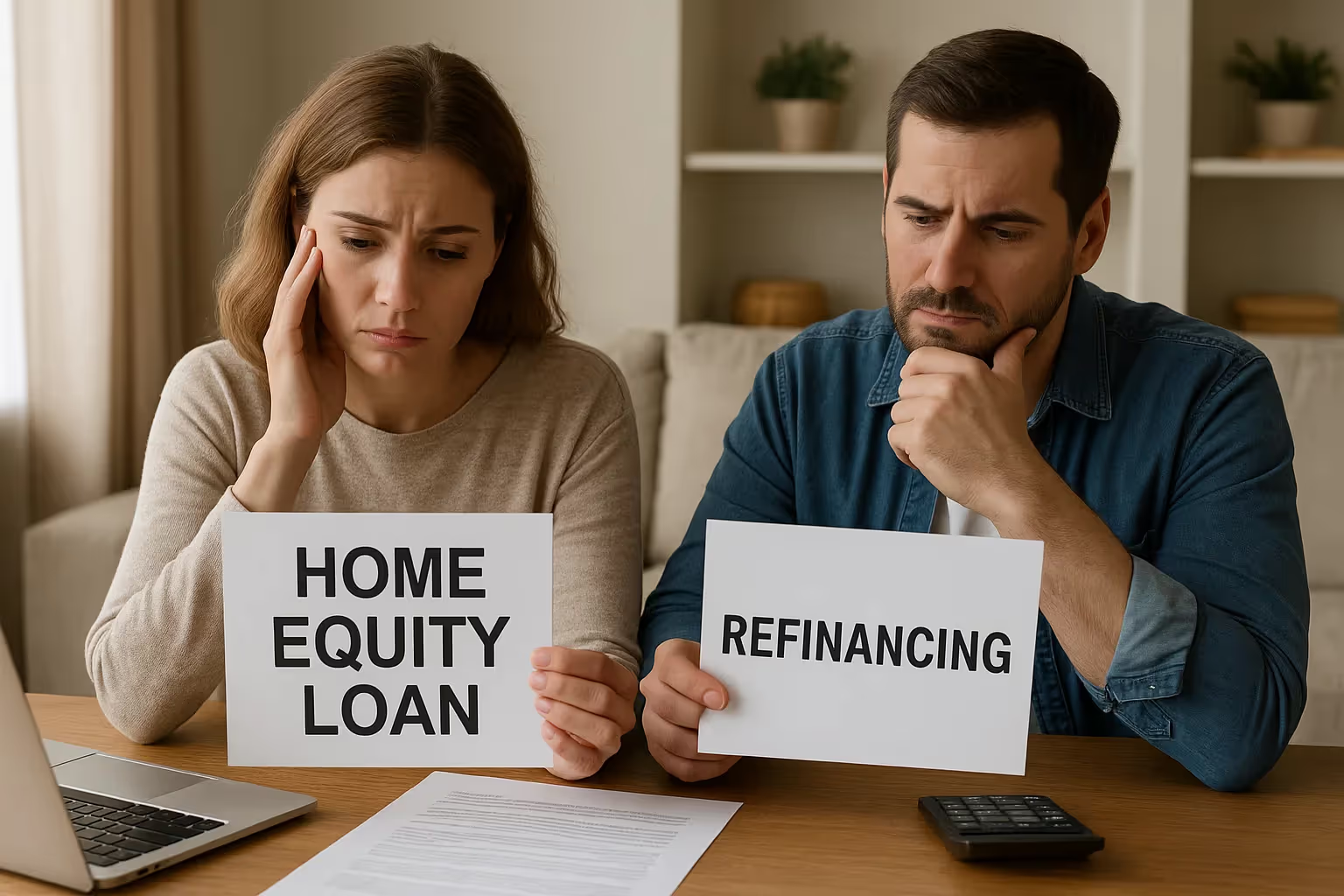
Sometimes, refinancing your entire mortgage isn't the best fit for your situation, especially if your main goal is to tap into the money you've built up in your home. Luckily, there are other ways to access that equity without going through a full mortgage refinance. These options can be simpler and might even save you money in the long run.
Exploring Home Equity Loans
A home equity loan is pretty straightforward. Think of it like a second mortgage on your house. You get a lump sum of cash upfront, and then you pay it back over time with a fixed interest rate. It's a good choice if you know exactly how much money you need and prefer predictable monthly payments. Your home is used as collateral, so it's important to be sure you can handle the payments.
Understanding Home Equity Lines of Credit (HELOCs)
A Home Equity Line of Credit, or HELOC, works a bit differently. Instead of a lump sum, you get access to a revolving line of credit, similar to a credit card. You can borrow, repay, and borrow again up to a certain limit during a specific period, called the draw period. After that, you enter the repayment period where you pay back what you've borrowed, usually with interest. This offers flexibility if you're not sure of the exact amount you'll need or if you have ongoing expenses. It's a secured product, meaning your home serves as collateral for the loan. You can explore home equity options that might fit your needs.
Considering Home Equity Agreements (HEAs)
Home Equity Agreements (HEAs) are a newer option that's quite different from traditional loans. With an HEA, you get a lump sum of cash in exchange for a percentage of your home's future value. The big difference? There are no monthly payments or interest charges. You settle the agreement when you sell your home, or at the end of the agreed-upon term, typically 10 years. This can be appealing if you want to avoid monthly debt obligations and are comfortable sharing in your home's appreciation.
Making Your Next Move
So, you've learned a lot about refinancing your mortgage. It's not just about getting a lower interest rate, though that's a big perk. You can also use it to shorten your loan term, get some cash out for big projects, or even combine debts. Remember, though, it's not a free ride – there are costs involved, like closing fees. You'll want to do the math to make sure the savings add up over time and that it makes sense for your specific situation. Credit unions like ours are here to help you figure all this out. We can walk you through the options and help you find the best path forward for your finances. Don't hesitate to reach out and see how refinancing could work for you.
Frequently Asked Questions
What exactly is refinancing a home loan?
Refinancing is like getting a brand new loan to pay off your old one. You're basically swapping your current mortgage for a new one, hopefully with better terms that help you save money or meet your current financial needs. Think of it as hitting a reset button on your home loan.
Why would I want to refinance my mortgage?
People refinance for a few main reasons. You might want to lower your monthly payments if interest rates have dropped, or maybe you want to pay off your loan faster by choosing a shorter loan term. Some people also refinance to get cash out of their home's value for things like home improvements or to pay off other debts.
What's the difference between a rate-and-term refinance and a cash-out refinance?
A rate-and-term refinance just changes the interest rate or the length of your loan, without you borrowing any extra money. A cash-out refinance lets you borrow more than you currently owe, and you get the difference in cash. This is great for big expenses, but it means you'll have a larger loan.
Do I need good credit to refinance?
Yes, lenders will check your credit score, just like when you first got your mortgage. A good credit score usually helps you get approved for better interest rates and terms. If your score has dropped since your last loan, you might not get the best deal, or you might not qualify.
What are closing costs, and how do they affect refinancing?
Closing costs are fees you pay when you finalize a new loan, similar to when you first bought your home. These can include things like appraisal fees and title fees. Because these costs can add up, it's important to figure out how long it will take for your monthly savings to cover them. This is called your break-even point.
When might refinancing NOT be a good idea?
Refinancing isn't always the best choice. If you plan to move soon, the closing costs might be more than you'll save. Also, if your credit score has gone down, you might not get a better rate. It's always smart to do the math and make sure the benefits outweigh the costs before you decide.












Get in touch with a loan officer
Our dedicated loan officers are here to guide you through every step of the home buying process, ensuring you find the perfect mortgage solution tailored to your needs.
Options
Exercising Options
Selling
Quarterly estimates
Loans
New home

Stay always updated on insightful articles and guides.
Every Monday, you'll get an article or a guide that will help you be more present, focused and productive in your work and personal life.








.png)
.png)
.png)
.avif)
.avif)
.avif)
.png)
.png)
.png)
.avif)
.png)
.png)
.avif)
.png)
.avif)
.png)
.avif)
.avif)