


Unlock Savings: Your Guide to Refinance Home Mortgage Loan Options
December 9, 2025
Explore refinance home mortgage loan options to save money. Learn about rate-term, cash-out, and more. Your guide to smarter home financing.

Thinking about refinancing your mortgage? It's a big step, and honestly, the whole thing can feel a bit much sometimes. Mortgage rates seem to have a mind of their own, bouncing around quite a bit. This makes you wonder if now is really the right time to even consider it, doesn't it? That's exactly what we're going to get into here. We'll break down what's happening with refinance home mortgage loan options and how you might be able to save some cash.
Key Takeaways
- Homeowners often look into refinancing their home mortgage loan to lower expenses. A refinance might let you get rid of private mortgage insurance, get a lower interest rate, shorten your mortgage term, or even change your mortgage type.
- Whether refinancing is a good idea really depends on what you want to achieve. If you need to cut costs, you'll need to figure out your break-even point to see if it's even worth the effort. If you need cash, a home equity agreement might be better than a cash-out refinance.
- Just like when you first got your mortgage, the refinance process involves paying fees. These include costs for loan origination, home appraisal, title search, and credit reports. These fees can add up to between 2% and 6% of the total loan amount.
- Even a small drop in your mortgage interest rate can mean saving a good amount of money each month. This extra cash can go towards bills, savings, or paying off other debts faster.
- Your credit score plays a big role when it comes to getting the best refinance home mortgage loan offers. A higher score usually means a better interest rate.
Understanding Your Home Mortgage Loan Refinance Options

So, you're thinking about refinancing your mortgage. It sounds like a big deal, and it is, but it's also a really common way homeowners adjust their loans to fit their lives better. Basically, refinancing means you're paying off your current home loan with a brand new one. This new loan can have different terms – maybe a lower interest rate, a different repayment period, or even let you pull out some cash from your home's value.
What Does It Mean to Refinance a Mortgage?
At its core, refinancing is like hitting a reset button on your home loan. You're essentially getting a new mortgage to replace your existing one. The main goal is usually to get better terms than what you originally signed up for. This could mean a lower monthly payment, a faster way to pay off your house, or getting access to the equity you've built up. It’s not just about changing numbers; it’s about making your mortgage work for you right now.
Key Reasons Homeowners Refinance
People decide to refinance for a bunch of reasons, but they usually boil down to a few main categories:
- Lowering Monthly Payments: This is probably the most popular reason. If interest rates have dropped since you got your original loan, you could snag a lower rate and cut down your monthly housing cost. This frees up cash for other things.
- Accessing Home Equity (Cash-Out): Your home's value might have gone up, or you've paid down a good chunk of your loan. A cash-out refinance lets you borrow against that equity, giving you a lump sum of cash for things like home improvements, paying off other debts, or covering unexpected expenses.
- Changing Loan Terms: Maybe you want to switch from a 30-year loan to a 15-year loan to pay off your house faster and save on interest over time. Or perhaps you have an adjustable-rate mortgage (ARM) and want to switch to a fixed rate for payment stability.
- Getting Rid of PMI: If you originally put down less than 20% on your home, you likely have Private Mortgage Insurance (PMI). If your home's value has increased or you've paid down enough of the loan, you might be able to refinance and eliminate that extra monthly cost.
The Core Benefits of Refinancing
Refinancing isn't just about changing paperwork; it can have real financial upsides. The biggest benefit is often saving money, either through lower monthly payments or by reducing the total interest you'll pay over the life of the loan. Beyond that, it can provide financial flexibility. Getting cash out can fund major life events or projects. Switching to a fixed-rate loan offers peace of mind against rising interest rates. It’s about tailoring your mortgage to your current financial picture and future plans.
Refinancing is a tool. Like any tool, it's most effective when you understand what it does and when to use it. It's not a magic fix for every financial situation, but for many, it's a smart move that can lead to significant savings and improved financial health over the years.
Exploring Different Types of Mortgage Refinance Loans
So, you're thinking about refinancing your mortgage. That's a big step, and before you jump in, it's smart to really get a handle on what you're looking at. Refinancing basically means you're swapping out your current home loan for a new one. This new loan might have a different interest rate, a different payoff timeline, or even a different amount. The main idea is to get a mortgage that fits your life better right now.
Rate-and-Term Refinance for Better Terms
This is probably the most common reason people refinance. The goal here is simple: get a lower interest rate than what you're currently paying. If rates have dropped since you got your original mortgage, you could potentially lower your monthly payment significantly. This frees up cash in your budget each month. It's not just about saving a few bucks; it can make a real difference in your financial flexibility. The key is that the new loan's terms are similar to your old one, just with a better rate. You might also be able to shorten your loan term, like switching from a 30-year to a 15-year mortgage, which helps you build equity faster and pay less interest overall.
Cash-Out Refinance to Access Home Equity
Maybe you need some cash for a big project, like a home renovation, or perhaps you want to pay off some high-interest debts. A cash-out refinance lets you do just that. You get a new mortgage for more than you currently owe on your home, and the difference is given to you in cash. This is a way to tap into the value your home has built up over time. It's like getting a loan against your home's equity, but it replaces your existing mortgage entirely.
Cash-In Refinance to Reduce Loan Balance
This type of refinance is less common, but it can be useful. Instead of borrowing more, you actually bring extra money to the closing table to pay down the principal balance of your new loan. This means your new mortgage will be for a smaller amount than your old one. It can help you lower your monthly payments or shorten your loan term even further, and it can also help you get rid of private mortgage insurance (PMI) sooner if you didn't put down 20% initially.
No-Closing-Cost Refinance Options
Closing costs can add up when you refinance – things like appraisal fees, title insurance, and origination fees. These can often be between 2% to 6% of your loan amount. A no-closing-cost refinance doesn't mean the costs disappear; they're usually rolled into your new loan's interest rate. This means your interest rate might be a bit higher than if you paid the costs upfront. It can be a good option if you don't have the cash on hand for closing costs or if you plan to move or refinance again before the higher interest rate really adds up.
When you're looking at refinancing, you'll run into two main types of loans: fixed-rate and adjustable-rate mortgages (ARMs). They work pretty differently, and which one is right for you depends a lot on your plans and how much risk you're comfortable with. A fixed-rate refinance means your interest rate stays the same for the entire life of the loan, offering predictability. An ARM, on the other hand, starts with a lower rate that can change over time based on market conditions. Choosing between them involves weighing stability against potential initial savings.
Navigating the Home Mortgage Loan Refinance Process
So, you've decided refinancing your mortgage is the way to go. That's great! But what actually happens next? It might seem a bit daunting, like trying to assemble furniture without instructions, but it's really not that complicated if you break it down. Think of it as a series of steps, each one leading you closer to that new, better loan.
Establishing Your Refinance Goals
Before you even start looking at lenders, you need to know what you want to get out of this. Are you trying to lower your monthly payment so you have more breathing room? Or maybe you want to pay off your house faster by switching to a shorter loan term? Perhaps you're looking to tap into your home's equity for a big project. Your goals will guide every decision you make from here on out. It's like planning a road trip; you need to know your destination before you pick your route.
Here are some common goals homeowners have when refinancing:
- Lower Monthly Payments: Reduce your outgoing cash each month.
- Shorter Loan Term: Pay off your mortgage faster, saving on total interest.
- Access Home Equity: Get cash for renovations, debt consolidation, or other needs.
- Remove Private Mortgage Insurance (PMI): If your home's value has increased significantly.
Figuring out your primary objective is the first real step. Without clear goals, you might end up with a refinance that doesn't actually help you in the long run, even if the interest rate looks good on paper.
Understanding the Credit Impact
Lenders will definitely check your credit score when you apply for a refinance. This is called a hard inquiry, and it can ding your score a few points. However, if you shop around for the best mortgage refinance options within a short period, most scoring models will count those multiple inquiries as just one. Generally, most conventional loans require a score of 620 or higher, but to get the best rates, you'll want to aim for the high 700s, ideally 780 or above.
Evaluating Home Equity and Loan-to-Value Ratio
Your home equity and your Loan-to-Value (LTV) ratio are super important. LTV is basically the amount you owe on your mortgage compared to the current market value of your home. Lenders use this to figure out how risky the loan is. An LTV of 80% or less usually gets you the best terms and helps you avoid PMI on a new conventional loan. If you started with PMI and your home's value has gone up, refinancing might be a great way to get rid of that extra monthly cost.
Here's a quick look at how LTV works:
As you can see, a lower LTV means you have more equity, which is generally better for getting approved and securing favorable terms.
Calculating the Financial Impact of Refinancing

So, you're thinking about refinancing your mortgage. That's smart! It's not just about getting a lower monthly payment, though that's a big part of it. It's about making sure your biggest debt is working for you, not against you. Let's break down how to figure out if refinancing makes financial sense for your situation.
The Significance of a Percentage Point Drop
It might not sound like much, but even a small drop in your interest rate can add up to a serious amount of money over the life of your loan. Think about it: your mortgage is likely the biggest loan you'll ever have. If you can shave off even one percentage point from your interest rate, you're looking at saving a good chunk of change every single month. For example, if you have a $300,000 mortgage and your rate goes from 7% down to 6%, you could save around $175 each month. Over 30 years, that's over $60,000 you won't have to pay in interest. Pretty wild, right? A 1-point decrease in mortgage interest rates can lead to significant monthly savings, potentially hundreds of dollars. This extra income can be allocated to various financial goals, such as covering household expenses, increasing investments, or accelerating debt repayment. Refinancing when rates drop offers a tangible opportunity to improve your financial situation.
Calculating Your Break-Even Point
Now, refinancing isn't free. There are closing costs involved – things like appraisal fees, title insurance, and other administrative charges. These can add up, often falling somewhere between 2% and 5% of your loan amount. So, you need to figure out when those monthly savings will actually cover these upfront expenses. This is what we call your break-even point.
Here’s a simple way to look at it:
- Estimate Total Closing Costs: Add up all the fees you expect to pay. This includes things like appraisal fees, title insurance, lender fees, and any other charges.
- Calculate Monthly Savings: Figure out how much less you'll pay each month with the new interest rate. Compare your current principal and interest payment to the new one.
- Determine Break-Even Time: Divide your total closing costs by your monthly savings. This tells you how many months it will take for the savings to pay for the costs.
For instance, if your closing costs are $6,000 and your monthly savings are $200, you'll break even after 30 months, or 2.5 years. If you plan to sell your home or move before you reach that point, refinancing might not be the best move right now.
Every month that passes with a higher-than-necessary interest rate is money that could be working harder for your financial future. The question isn't whether you can afford to refinance – it's whether you can afford not to explore this opportunity. Think of it this way: if you can save $200 a month by refinancing, and you wait a year to do it, that's $2,400 you've essentially given away in interest payments. When you compare that to the closing costs, which might be a few thousand dollars, waiting might actually cost you more in the long run.
Comparing Refinance Offers
When you get quotes from different lenders, don't just look at the interest rate. You need to compare the Annual Percentage Rate (APR), which includes fees and gives a more accurate picture of the total cost. Also, consider the loan term. Sometimes, a slightly higher rate with a shorter term can save you more money over the life of the loan than a lower rate on a new 30-year term. It's also important to check for any prepayment penalties on your current loan that could eat into your savings. Make sure you understand all the fees associated with each offer, like origination fees, appraisal fees, and title insurance. It's wise to get quotes from at least three different lenders to ensure you're getting the best deal possible for your new mortgage.
Considering Alternatives to Refinancing Your Mortgage
Sometimes, refinancing your home loan isn't the best path forward, or maybe you're looking for something a little different than a full refinance. It's smart to know what other options are out there, especially if your main goal is to tap into your home's equity or manage your debt. You've got choices, and understanding them can help you make the most financially sound decision for your situation.
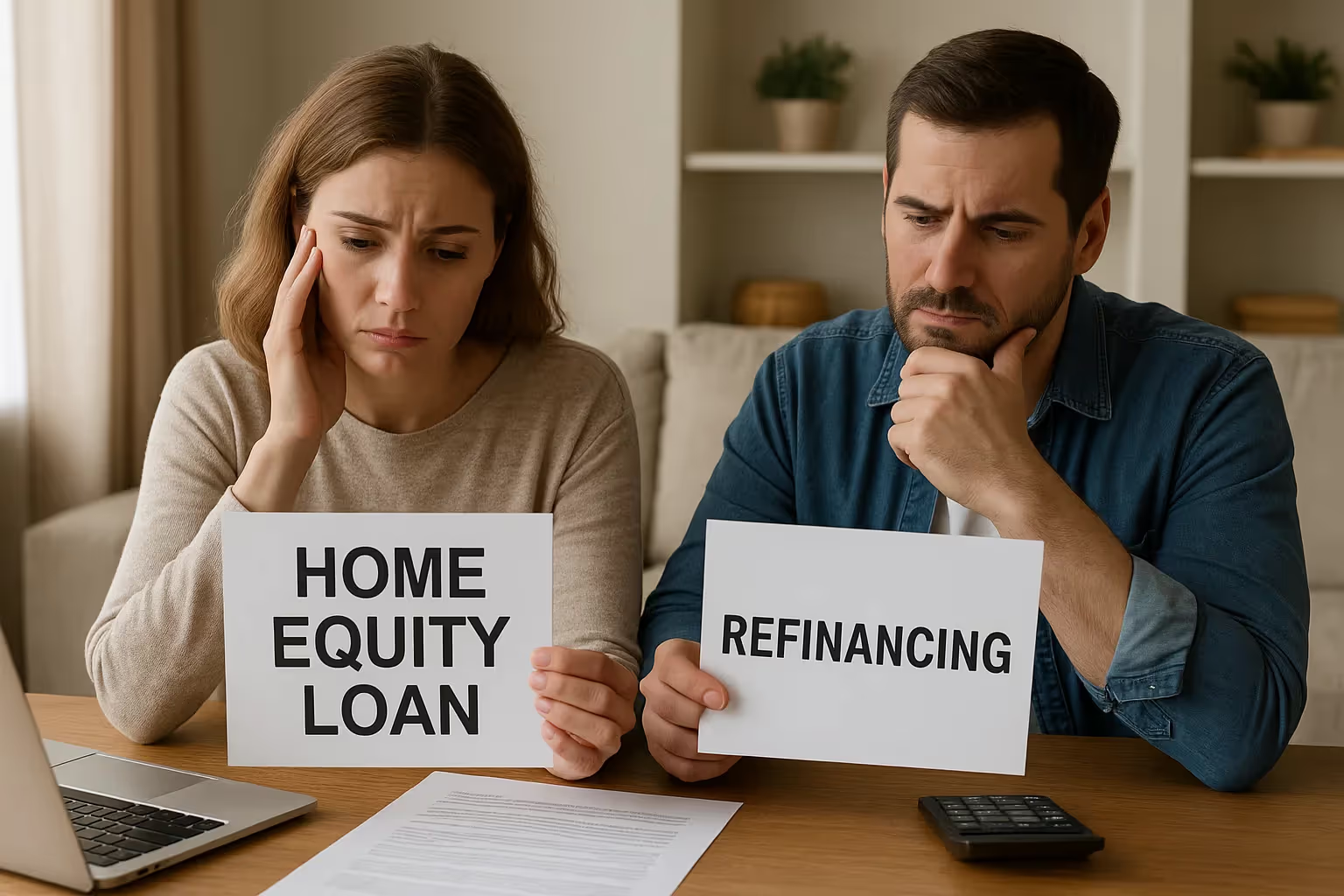
Home Equity Loans vs. HELOCs
If you need cash but don't want to replace your entire mortgage, looking into your home's equity is a good idea. Think of it like this: your home has value beyond what you owe on the mortgage, and you might be able to borrow against that difference. Two common ways to do this are through a home equity loan or a Home Equity Line of Credit (HELOC).
A home equity loan gives you a lump sum of money upfront. You then pay it back over a set period with fixed monthly payments, kind of like a traditional loan. It's straightforward and predictable.
A HELOC, on the other hand, works more like a credit card. You get approved for a certain amount you can borrow from over time, and you only pay interest on what you actually use. There's usually a 'draw period' where you can take out money, followed by a repayment period. This can be flexible if you're not sure exactly how much cash you'll need.
Here's a quick comparison:
Both of these options allow you to access funds using your home equity without altering your primary mortgage terms. This can be a great way to pay for renovations, education costs, or unexpected bills.
When Refinancing Might Not Be the Best Choice
Refinancing sounds great, especially when interest rates drop, but it's not always the perfect solution. There are closing costs involved, which can add up. If you plan to sell your home in the next few years, those costs might eat up any savings you'd get from a lower rate before you even break even. It's important to calculate that break-even point – the time it takes for your monthly savings to cover the refinance expenses.
Also, consider your credit score. While you can refinance with less-than-perfect credit, you won't get the best rates. If your score has dropped since you got your original mortgage, you might not see the savings you expect. It's also worth noting that refinancing to a new 30-year loan, even at a lower rate, means you'll be paying interest for longer, potentially costing you more overall.
Sometimes, the simplest approach is the best. If your current mortgage terms are already favorable and you don't have an immediate need for cash or a compelling reason to change your loan structure, sticking with your existing loan might be the wisest financial move. Don't feel pressured to refinance just because it's a common topic; evaluate it based on your personal financial picture and goals.
Other factors to think about include:
- Short-term ownership: If you're likely to move soon, the closing costs might not be worth it.
- High closing costs: Some loans come with significant fees that can negate savings.
- Existing low rate: If your current mortgage rate is already very low, it might be hard to find a significantly better one.
- Credit score issues: A lower credit score can lead to higher rates, making refinancing less attractive.
Specialized Refinance Programs for Homeowners
Beyond the standard rate-and-term or cash-out options, there are some specific refinance programs designed for particular situations or borrower groups. These can offer unique advantages if you fit the criteria.
Streamline Refinance for Government-Backed Loans
If your current mortgage is backed by the FHA, VA, or USDA, you might be eligible for a "streamline" refinance. The main idea here is to simplify the process, often cutting down on paperwork and appraisals. For example, an FHA Streamline Refinance might not require a new appraisal or a full income check, making it quicker. Similarly, VA loans have the IRRRL (Interest Rate Reduction Refinance Loan) which also aims for less hassle. These programs are usually geared towards lowering your monthly payment or switching from an adjustable rate to a fixed one. You generally need to have made a certain number of on-time payments on your current loan before you can apply.
Reverse Mortgage Refinance for Seniors
This option is specifically for homeowners aged 62 and older. A reverse mortgage refinance allows you to convert some of your home's equity into cash. The big difference is that you don't make monthly payments on the loan. Instead, the loan is repaid when you sell the home, move out, or pass away. It can be a way to supplement retirement income, but it does reduce the amount of equity left for heirs. You'll typically need to go through counseling with a HUD-approved counselor before you can proceed.
Debt-Consolidation Refinance Strategies
Sometimes, people look to refinance their mortgage as a way to manage other debts. This is often called a debt-consolidation refinance. The idea is to take out a larger mortgage than you currently owe, and use the extra cash to pay off things like high-interest credit cards or personal loans. This can result in a lower overall monthly payment because mortgage interest rates are usually lower than those on credit cards. However, it's important to remember that you're essentially rolling unsecured debt into your mortgage, which is secured by your home. If you can't make the payments, you could risk losing your house.
Refinancing to consolidate debt can simplify your monthly bills and potentially lower your interest costs. However, it's crucial to understand that you're converting unsecured debt into secured debt, meaning your home becomes collateral. Always weigh the long-term financial implications carefully.
Making Your Next Move
So, you've looked at all the ways refinancing can help you save money or get cash out. It's a big decision, for sure, and not something to rush into. Think about what you really need your mortgage to do for you right now and in the future. Compare those rates, add up those closing costs, and figure out when you'll start seeing real savings. Your home loan is a major part of your finances, and making sure it's working for you is just smart planning. Take the time to explore your options, and you might find a much better fit for your wallet.
Frequently Asked Questions
What exactly does it mean to refinance a mortgage?
Refinancing your mortgage is basically like getting a brand new loan to pay off your old one. You do this to try and get better terms, like a lower interest rate, a shorter time to pay it back, or sometimes to get some cash out of your home's value.
When is a good time to think about refinancing?
It's usually a good idea to look into refinancing when interest rates have dropped since you first got your loan. It can also make sense if your financial situation has changed and you want to adjust your loan terms or access your home's equity for other needs.
What's the difference between a rate-and-term refinance and a cash-out refinance?
A rate-and-term refinance focuses on getting you a better interest rate or changing the loan's payoff time, without borrowing extra money. A cash-out refinance lets you borrow more than you owe, and you get the extra money as cash. You can use this cash for things like home improvements or paying off other debts.
Do I have to pay fees when I refinance?
Yes, refinancing usually comes with closing costs, similar to when you first bought your home. These can include fees for things like appraisals, title searches, and loan applications. Some lenders offer 'no-closing-cost' options, but these often mean you'll pay a slightly higher interest rate.
How does refinancing affect my credit score?
When you apply to refinance, the lender will check your credit, which is called a 'hard inquiry.' This can slightly lower your score for a short time. However, shopping around for the best rate within a short period usually counts as just one inquiry, so it minimizes the impact.
Is refinancing always a good idea?
Not always. You need to figure out if the money you'll save each month is worth the closing costs, and how long it will take to make back that money (your break-even point). If you plan to move soon, it might not be worth it. Also, if your main goal is just to get cash, other options like a home equity loan might be better.












Get in touch with a loan officer
Our dedicated loan officers are here to guide you through every step of the home buying process, ensuring you find the perfect mortgage solution tailored to your needs.
Options
Exercising Options
Selling
Quarterly estimates
Loans
New home

Stay always updated on insightful articles and guides.
Every Monday, you'll get an article or a guide that will help you be more present, focused and productive in your work and personal life.








.png)
.png)
.png)
.avif)
.avif)
.avif)
.png)
.png)
.png)
.avif)
.png)
.png)
.avif)
.png)
.avif)
.png)
.avif)
.avif)